
On this page
What is allergy & immunology RCM automation?
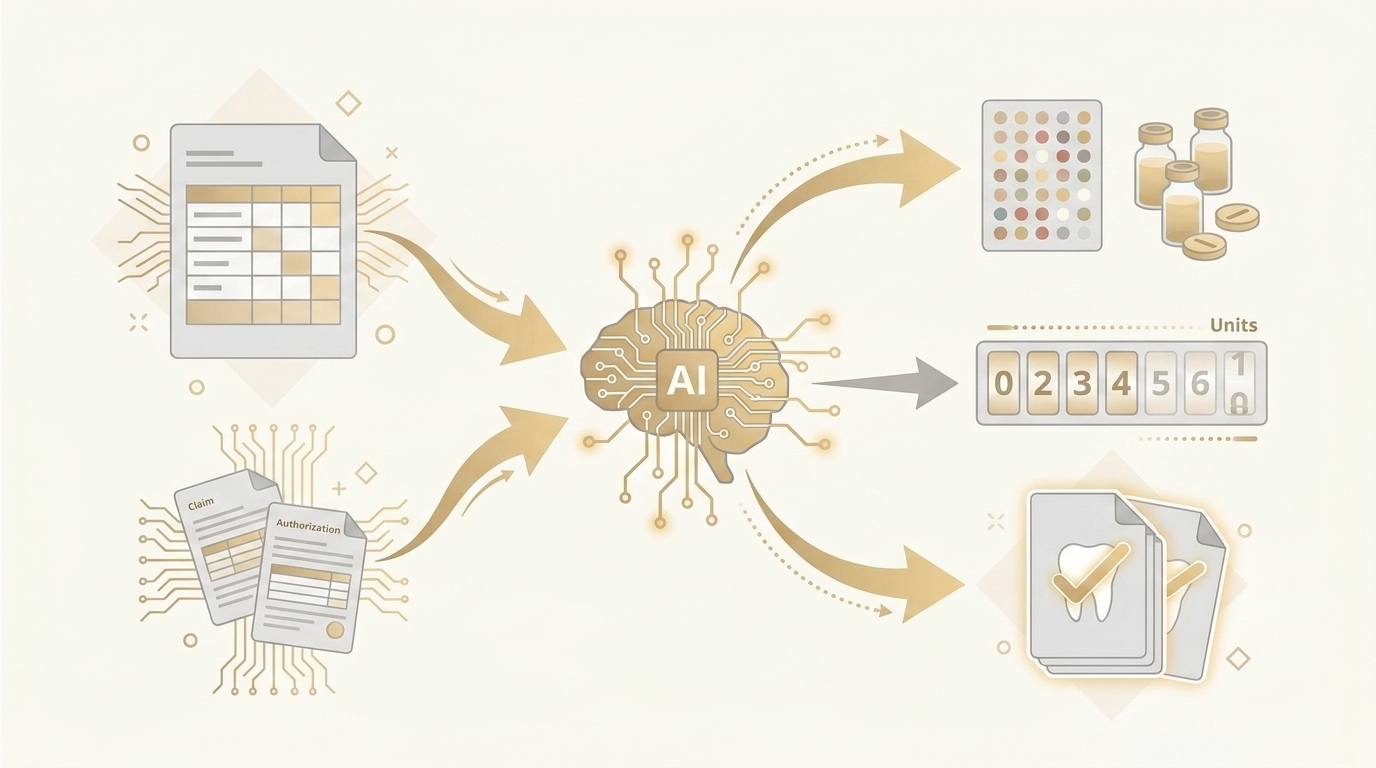
Allergy and immunology RCM automation uses AI agents to handle the repetitive, error-prone revenue cycle work in an allergy & immunology practice — unit-based immunotherapy billing, prior authorizations for biologics, claim statusing, denial rework, and AR follow-up — by working inside your practice management system and payer portals like a human biller, with no API integrations required. The result is cleaner unit-based claims, faster authorizations, and staff freed from portal busywork.
Allergy & immunology billing looks simple until you watch the units. The specialty's bread-and-butter services are billed per unit or per antigen, which makes them unusually easy to under- or over-bill — and unusually easy for payers to deny.
Why allergy & immunology revenue cycle is error-prone
The denial risk in allergy & immunology concentrates in a few places:
- Unit-based immunotherapy. Allergen immunotherapy administration and antigen preparation are billed by units and doses (the 95115–95117 and 95165 family). Getting the unit counts right — and matching them to what was prepared and administered — is a constant source of denials and lost revenue.
- Allergy testing volume. Percutaneous and intradermal testing is billed per test, often dozens per patient, so small per-unit errors scale quickly across a busy clinic.
- Biologic prior authorizations. Biologics for severe asthma, chronic urticaria, and atopic disease require prior authorization, step therapy documentation, and frequent reauthorization — each one a trip through a payer or PBM portal.
- Recurring visits. Immunotherapy patients return on a schedule, so a single recurring billing error repeats week after week until someone catches it.
Between counting units and chasing authorizations, allergy billers spend most of their time inside portals instead of resolving the exceptions that need judgment.
Where AI agents help across the allergy & immunology revenue cycle
The AI-native revenue engine for allergy & immunology groups targets the highest-volume, highest-error steps:
1. Prior authorization for biologics
AI agents submit and track prior authorizations across payer and PBM portals, attach the required clinical documentation, and flag reauthorizations before they lapse — so patients stay on therapy without revenue stalling.
2. Unit-aware claim statusing
Agents status claims across 300+ payer portals on a schedule and surface the ones that need action, including the unit-based immunotherapy and testing claims most likely to be denied or short-paid.
3. Denial management and appeals
Agents triage denials by reason code, pull supporting documentation, and prepare or file appeals — so unit and medical-necessity denials get reworked instead of written off.
4. Eligibility and benefits verification
Agents verify coverage and benefits before visits, reducing the front-end errors that drive downstream denials on recurring immunotherapy patients.
5. AR follow-up
Agents work aged receivables continuously, following up 24/7 so balances don't age past collection.
How it works without APIs
Payer portals, PBM tools, and allergy & immunology PM/EHR systems rarely offer a usable API. Ventus agents don't need one. They navigate interfaces with computer vision and AI the way a human biller does — handling logins, MFA, and CAPTCHAs, completing forms, and updating worklists. Deployment takes days, and it works with the systems you already use.
Every action is captured in a full audit trail, and the platform is HIPAA compliant and SOC 2 Type II certified, so PHI stays inside your existing permissions and boundaries.
What allergy & immunology teams can expect
Results vary by payer mix and workflow, but practices automating these steps typically see:
- Much less manual portal work as agents take over statusing and follow-up
- Cleaner unit-based claims with fewer short-pays and denials
- Faster prior authorizations so biologic patients start and stay on therapy
- Lower days sales outstanding (DSO) and a tighter revenue cycle
Fixing recurring unit errors alone can recover revenue that quietly leaks every week.
Getting started
Start with the workflows that leak the most — usually biologic prior auth and unit-based denial rework — then expand the workforce across statusing, eligibility, and AR.
- Explore the allergy & immunology AI agents
- Model your savings with the ROI calculator
- Book a demo to map your highest-impact allergy & immunology workflows
Allergy & immunology billing rewards precision. With AI agents counting units, chasing authorizations, and working denials, your practice keeps the revenue it earns and gives its team back the day.