
On this page
What is dermatology RCM automation?
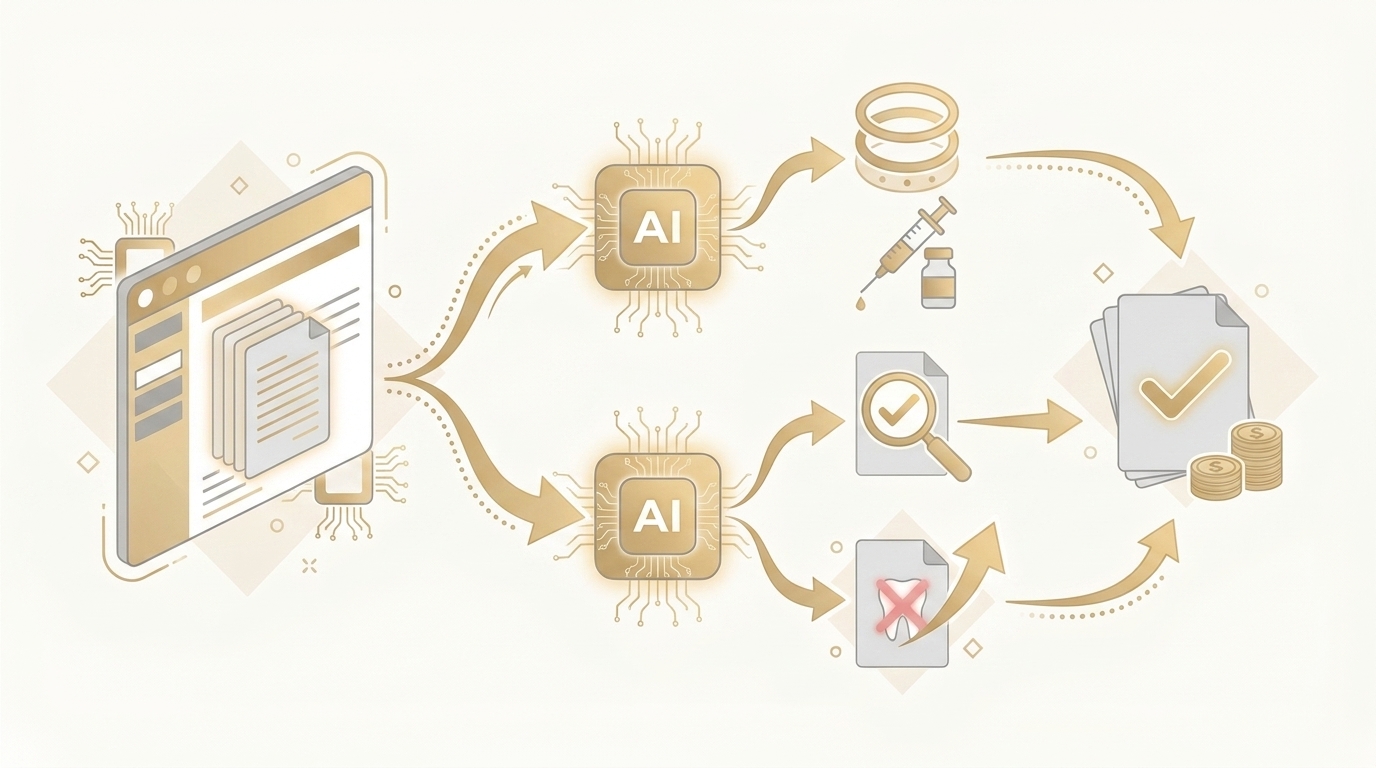
Dermatology RCM automation uses AI agents to handle the repetitive, portal-heavy revenue cycle work that slows down a dermatology practice — prior authorizations for biologics, claim statusing, denial rework, and AR follow-up — by logging into your PMS and payer portals and doing the work like a human biller, with no API integrations required. The result is faster authorizations, fewer write-offs, and billers freed for the exceptions that actually need judgment.
Dermatology is one of the hardest specialties to bill cleanly. A single practice mixes high-volume medical visits, surgical procedures, pathology, and a growing book of expensive biologic therapies — each with its own payer rules. That complexity is exactly where revenue leaks.
Why dermatology revenue cycle is so denial-prone
Three structural pressures make dermatology RCM uniquely painful:
- Biologic prior authorizations. Therapies like dupilumab, and biologics for psoriasis and atopic dermatitis, almost always require prior authorization, step therapy documentation, and frequent reauthorization. Each request means logging into a payer or pharmacy-benefit portal, attaching clinical notes, and chasing status for days.
- Modifier 25 and bundling denials. Dermatologists routinely perform a procedure on the same day as a separate E/M visit. Payers aggressively deny these unless modifier 25 is applied correctly and supported, making it one of the most common dermatology denial reasons.
- Mixed medical and cosmetic work. Determining medical necessity, splitting cosmetic from covered services, and documenting it to each payer's standard adds manual review to a large share of encounters.
Layer on Mohs surgery coding (17311–17315), pathology billing (88305), and high daily claim volume, and the typical dermatology biller spends most of the day inside payer portals instead of resolving real exceptions.
Where AI agents help across the dermatology revenue cycle
The AI-native revenue engine for dermatology groups targets the steps that consume the most staff hours:
1. Prior authorization for biologics
AI agents submit prior auth requests across payer and PBM portals, attach the required clinical documentation, track each request to a decision, and flag reauthorizations before they lapse — so patients start and stay on therapy without revenue sitting in limbo.
2. Bulk claim statusing
Instead of a biller checking claims one at a time, agents status hundreds of claims across 300+ payer portals on a schedule, surfacing only the ones that need action. This is the same bulk claim statusing approach that compresses hours of portal work into minutes.
3. Denial management and appeals
Agents triage denials by reason code, pull the supporting documentation, and prepare or file appeals — including the modifier 25 and medical-necessity denials that dominate dermatology — so denied claims get reworked instead of written off.
4. Eligibility and benefits verification
Before the visit, agents verify coverage and benefits, reducing the front-end errors that cause downstream denials.
5. AR follow-up
Agents work aged accounts receivable continuously, following up on open claims around the clock so balances don't age past the point of collection.
How it works without APIs
Most payer portals, PBM tools, and dermatology PMS platforms have no usable API. Ventus agents don't need one. They use computer vision and AI to navigate interfaces the way a human biller does — logging in, handling MFA and CAPTCHAs, completing forms, reading results, and updating your worklists. That means deployment in days, compatibility with the systems you already run, and no engineering project to staff.
Every action is captured in a full audit trail, and the platform is HIPAA compliant and SOC 2 Type II certified — so PHI stays inside the same permissions and boundaries your staff already use.
What dermatology teams can expect
Results vary by payer mix and workflow, but dermatology groups automating these steps typically see:
- Dramatically less manual portal work — agents handle statusing and follow-up that previously consumed most of a biller's day
- Faster prior authorizations, so biologic patients start therapy sooner
- Fewer write-offs as denials get reworked instead of abandoned
- A shorter revenue cycle and lower days sales outstanding (DSO)
Billers stop swivel-chairing between portals and spend their time on the exceptions that need a human.
Getting started
The fastest path is to identify the two or three workflows leaking the most revenue — usually biologic prior auth and denial rework — and automate those first. From there, the workforce expands across statusing, eligibility, and AR.
- See the dermatology AI agents in detail
- Model your savings with the ROI calculator
- Book a demo to map your highest-impact dermatology workflows
Dermatology RCM doesn't have to mean a billing team buried in payer portals. With AI agents handling the repetitive work, your group recovers revenue it has already earned — and your staff get their day back.