
How do DSOs recover millions in wrongly denied dental claims? Learn how AI-powered appeal automation cuts appeal cycle times by 60% across 50+ locations.
What Is Dental Claim Appeal Automation?
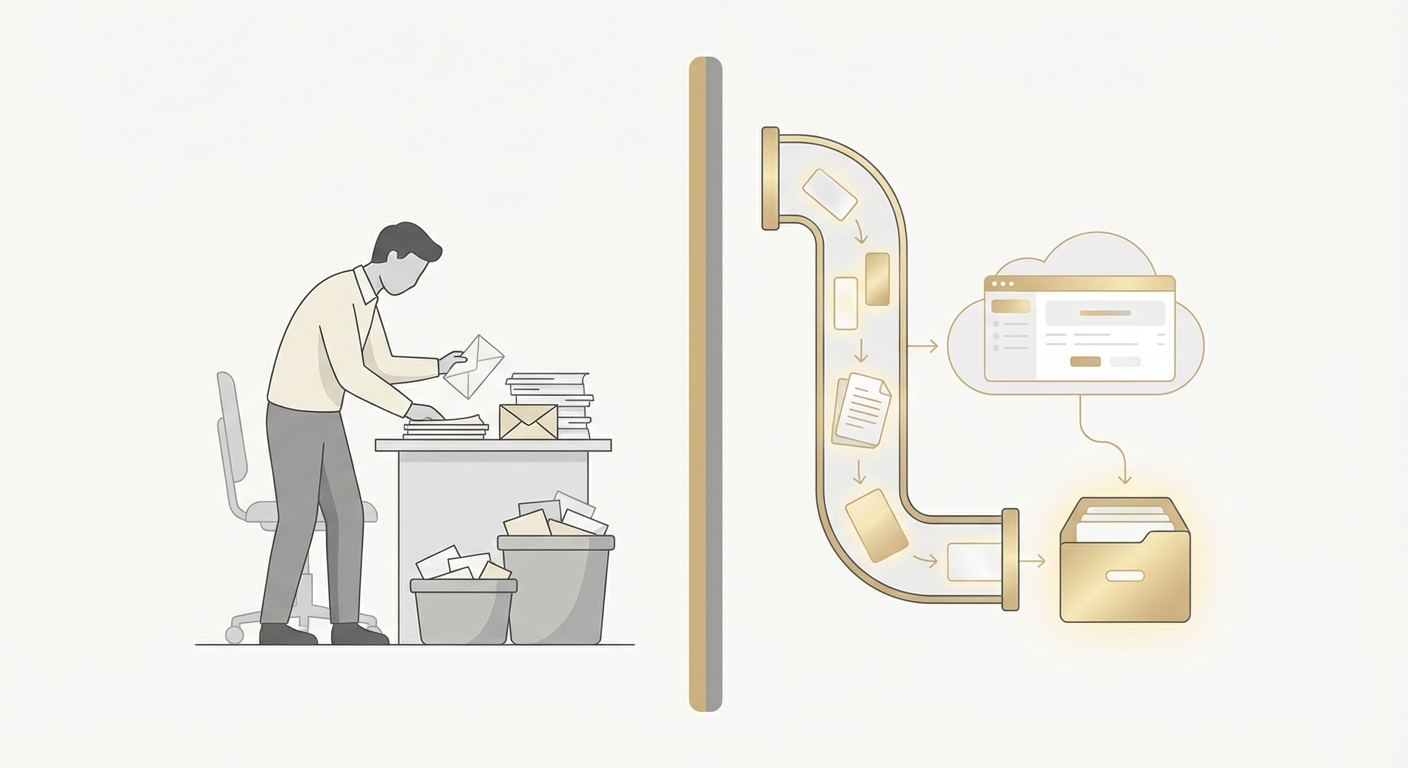
Dental claim appeal automation is the use of AI agents to identify, prepare, submit, and track appeals for wrongly denied insurance claims across a dental organization's entire portfolio — without manual intervention at each step. Instead of billing coordinators spending 20–45 minutes per appeal letter, AI agents pull denial reason codes, match them against payer-specific appeal requirements, generate compliant narratives with supporting documentation, and submit appeals through payer portals — all within minutes.
For DSOs managing 50 to 500+ locations, the impact is staggering. The American Dental Association estimates that 5–10% of all dental claims are initially denied, and industry data from MGMA suggests that only 35–50% of denied claims are ever appealed — meaning the majority of recoverable revenue simply evaporates. At enterprise scale, that gap can represent $1.5M to $5M+ in annual lost revenue that was legitimately owed.
Smilist, a DSO scaling to 100+ locations, deployed Ventus AI for claim statusing across their portfolio. AI agents now execute over 3,000 status checks per day — replacing what would require a team of 5–8 dedicated coordinators. That same infrastructure powers their denial identification pipeline, ensuring appeals are triggered within hours of denial — not weeks.
In this guide, we'll break down why appeal recovery is one of the highest-ROI opportunities for DSO finance teams in 2026, compare the three dominant approaches to managing appeals at scale, walk through an enterprise implementation roadmap, and share the specific metrics your CFO needs to justify investment. Whether you're integrating newly acquired practices or standardizing billing across a mature portfolio, this is the playbook for recovering revenue that's already been earned.
The Hidden Cost of Unworked Appeals Across a Growing DSO
Every DSO executive understands that denials are a problem. What's less obvious is the compounding cost of appeals that are never filed — or filed too late, too inconsistently, or without adequate documentation.
Consider the math for a 75-location DSO averaging 800 claims per location per month:
- Total monthly claims: 60,000
- Denial rate at 7%: 4,200 denied claims per month
- Average denied claim value: $350
- Monthly denied revenue: $1,470,000
- Appeals filed (industry average 40%): 1,680
- Successful overturn rate (industry average 50%): 840 claims recovered
- Monthly recovered revenue: $294,000
- Monthly abandoned revenue: $1,176,000
That's over $14 million per year in revenue that was earned, billed, and denied — then never recovered. Even if your organization appeals at a higher rate, the gap between what's denied and what's recovered is almost always measured in millions.
The problem intensifies during M&A activity. After acquiring 10–15 new locations, DSOs often discover that each practice has different appeal workflows, different documentation standards, and different timelines for filing. Some practices track denials in spreadsheets. Others rely on a single coordinator who knows the payer quirks from memory — institutional knowledge that walks out the door with every resignation.
Manual appeal processes also create cascading problems:
- Timely filing violations: Most payers impose 30–90 day appeal deadlines. When coordinators are buried in daily claims, appeals slip past these windows permanently.
- Inconsistent narratives: Without standardized templates, the quality of appeal letters varies wildly across locations. One office may achieve a 65% overturn rate while another gets 25% on identical denial codes.
- FTE cost escalation: A skilled billing coordinator can typically research, draft, and submit 8–12 appeals per day. At enterprise volume, you need a dedicated appeals team of 10–15 FTEs just to cover half your denials — at a fully loaded cost of $45K–$55K per coordinator annually.
- Invisible revenue leakage: Without centralized tracking, leadership often doesn't even know the true scope of unworked appeals. It's the largest line item that never appears on a P&L.
For DSOs preparing for recapitalization or exit, this matters beyond operations. Acquirers and PE firms evaluate net collection rates, days in AR, and denial management maturity as indicators of portfolio health. A DSO that recovers 70% of its denied claims commands a meaningfully different valuation multiple than one recovering 30%.
DSOs with 50+ locations save 40% on RCM costs in the first 90 days.
Request an Enterprise AssessmentThree Models for DSO Denial Appeals: A Head-to-Head Comparison
DSO leaders evaluating appeal management at scale generally choose between three models. Each has trade-offs around cost, control, scalability, and speed.
1. In-House Appeals Teams
Best for: DSOs with stable location counts and strong existing RCM leadership who want full operational control.
- Pros: Direct oversight of quality and compliance; deep institutional knowledge of your specific payer mix; coordinators can handle escalations and edge cases in real time.
- Cons: Extremely difficult to scale during rapid growth; recruiting and retaining experienced appeals specialists is increasingly competitive; training new hires across 15+ payer portals takes 3–6 months; FTE costs scale linearly with volume.
2. Outsourced RCM / Appeals Vendors
Best for: DSOs that need to offload appeals quickly, especially post-acquisition, and are willing to trade margin for speed.
- Pros: Immediate capacity without hiring; established payer relationships and appeal templates; often includes reporting and analytics.
- Cons: Per-claim fees compress margins (typically $8–$15 per appeal); limited transparency into actual workflows; quality varies by vendor and by the offshore team assigned to your account; vendor lock-in can create dependency.
3. AI Agent-Driven Appeal Automation
Best for: DSOs seeking to standardize appeal workflows across 50+ locations while reducing cost-per-appeal by 60–80% and maintaining compliance.
- Pros: Processes appeals in minutes, not hours; scales instantly across new locations without additional FTEs; standardizes narratives and documentation organization-wide; 24/7 operation with full audit trails; integrates with existing PMS and payer portals via browser-native automation (no API required).
- Cons: Requires initial configuration of payer-specific appeal rules and templates; complex clinical judgment calls still need human review; organizational change management needed for billing teams.
Comparison: Manual vs. Outsourced vs. AI-Driven Appeals
| Metric | In-House Manual | Outsourced Vendor | Ventus AI Agents |
|---|---|---|---|
| Appeals processed per day per FTE | 8–12 | 15–20 (offshore teams) | 200–500+ per agent |
| Cost per appeal | $18–$25 (fully loaded FTE) | $8–$15 per claim | $2–$5 per claim |
| Time from denial to appeal submission | 5–15 business days | 3–7 business days | Same day to next business day |
| Timely filing compliance | 70–85% | 85–92% | 98%+ |
| Narrative consistency across locations | Low (varies by coordinator) | Medium (template-dependent) | High (standardized, payer-specific) |
| Scalability during M&A | Requires new hires (3–6 month ramp) | Requires contract renegotiation | Instant — add locations in days |
| Audit trail completeness | Partial (manual logging) | Vendor-dependent | Full — every action logged and exportable |
| HIPAA/SOC 2 compliance | Depends on internal controls | Varies by vendor | SOC 2 Type II certified, HIPAA compliant |
The data is clear: for DSOs operating at scale, AI-driven appeal automation delivers the lowest cost per appeal, the fastest submission times, and the most consistent quality. This doesn't mean eliminating your billing team — it means redeploying experienced coordinators from repetitive appeal prep to high-value activities like complex clinical appeals, payer negotiations, and process optimization.
Enterprise Implementation Roadmap: From Pilot Site to Full Portfolio Deployment
Deploying dental claim appeal automation across a multi-location DSO isn't a flip-the-switch event — but it's far faster than most executives expect. Here's the proven roadmap that organizations like Smilist have followed to go from evaluation to enterprise-wide deployment.
Phase 1: Pilot Configuration (Days 1–7)
Select 3–5 representative locations that reflect your payer mix diversity. Ventus AI agents connect to your existing practice management systems and payer portals through browser-native automation — no API integrations, no IT infrastructure changes. During this phase:
- AI agents are configured for your top 10 denial reason codes (which typically account for 70–80% of all denials)
- Appeal narrative templates are built for each payer's specific requirements
- MFA flows, CAPTCHAs, and security protocols are mapped for each portal
- Communication channels are established via Slack, Teams, or email for exception alerts
Phase 2: Supervised Execution (Weeks 2–3)
AI agents begin processing appeals at pilot locations with human review on every submission. Your team validates narrative quality, documentation completeness, and submission accuracy. This phase builds trust and surfaces edge cases specific to your organization.
"Ventus stands out from the noise in the AI and automation market. Their approach allows them to ramp up quickly in the messy middle of RCM."
— Philip Toh, Co-founder & President, Smilist
Phase 3: Autonomous Scaling (Weeks 4–8)
Once accuracy benchmarks are met (typically 95%+ on standard denial codes), agents move to autonomous operation with exception-based human review. Rollout expands to the full portfolio in waves of 10–20 locations per week.
Common Pitfalls to Avoid at Scale
- Skipping payer-specific configuration: Generic appeal templates get rejected. Each payer has unique documentation requirements, and AI agents must be trained on these differences.
- Ignoring change management: Billing coordinators may feel threatened by automation. Frame AI agents as teammates that eliminate the tedious work — not replacements. The best DSOs redeploy coordinators to higher-value denial prevention and payer strategy roles.
- Deploying without audit trail requirements: Ensure every appeal action is logged, timestamped, and exportable. This is non-negotiable for SOC 2 and HIPAA compliance and for payer audit defense.
- Not tracking overturn rates by payer and code: AI agents generate granular data on which payers deny which codes and which appeal approaches succeed. Use this data to drive upstream process improvements.
For a deeper look at how AI agents handle the upstream claim statusing that feeds your appeal pipeline, see our guide on bulk claim status checking for dental organizations.
ROI Reality Check: What DSO CFOs Actually Achieve With Appeal Automation
The financial case for dental claim appeal automation is among the most straightforward in healthcare operations. Here's what enterprise organizations are measuring after deployment:
Revenue Recovery
- Direct appeal revenue recovered: DSOs with 75+ locations typically recover an additional $800K–$2.5M annually by automating appeals that were previously unworked or filed past deadlines.
- Timely filing savings: Eliminating timely filing violations alone can recover $200K–$600K per year for mid-size DSOs — revenue that was permanently lost under manual processes.
- Overturn rate improvement: Standardized, payer-specific narratives consistently achieve 55–70% overturn rates versus 40–50% with inconsistent manual approaches.
Cost Reduction
- FTE reallocation: Organizations typically redeploy 4–8 FTEs from appeal prep to denial prevention, payer strategy, or patient-facing roles — representing $180K–$440K in annual labor reallocation.
- Cost-per-appeal reduction: From $18–$25 per appeal (manual) to $2–$5 per appeal (AI-driven) — a 75–85% cost reduction per unit of work.
Operational Metrics
- Days to appeal submission: Reduced from 5–15 business days to under 24 hours.
- Appeal volume capacity: 10x–20x increase without additional headcount.
- Denial-to-resolution cycle time: Reduced by 40–60% on average.
Timeline to Results
- Quick wins (Week 1–2): Pilot locations see first automated appeals submitted; denied claims backlog begins clearing.
- Measurable impact (Month 1–2): Portfolio-wide appeal rates increase from ~40% to 85%+; first recovery revenue appears on financial reports.
- Full ROI realization (Month 3–6): Upstream denial patterns identified and addressed; net collection rate improvement of 2–4 percentage points across the portfolio.
Use our ROI calculator to model the specific impact for your organization's claim volume, denial rate, and payer mix.
See why scaling DSOs trust Ventus AI to automate claim statusing, denials, and AR follow-up.
Request a Demo and Free RCM AuditFrequently Asked Questions
How does dental claim appeal automation actually work?
AI agents monitor your practice management system and payer portals for denied claims, then automatically prepare and submit appeals. Ventus AI agents use browser-native automation to log into payer portals (handling MFA and CAPTCHAs), pull the denial reason code, match it against payer-specific appeal requirements, generate a compliant narrative with supporting documentation, and submit the appeal — all without API integrations. When an appeal requires clinical judgment or unusual documentation, the agent flags it for human review via Slack, Teams, or email.
How much does dental claim appeal automation cost?
Cost varies by volume, but most DSOs see a cost-per-appeal of $2–$5 with AI automation versus $18–$25 with manual FTE processing and $8–$15 with outsourced vendors. More importantly, the ROI is typically 5x–10x the investment within the first 90 days — driven by recovered revenue from previously unworked appeals and eliminated timely filing violations. Book a 30-minute demo to get a custom projection based on your claim volume.
How long does it take to deploy appeal automation across a DSO?
Under 7 days for an initial pilot at 3–5 locations with Ventus AI. Full portfolio deployment across 50–100+ locations typically takes 4–8 weeks using a phased rollout. Smilist, a DSO scaling to 100+ locations, ramped to 3,000+ daily claim status checks during their deployment — the same infrastructure that powers appeal identification and submission at scale.
Is AI-powered appeal automation HIPAA compliant?
Yes. Ventus AI is SOC 2 Type II certified and fully HIPAA compliant, with signed BAAs available for every client. All data is encrypted in transit and at rest, every agent action is logged in a complete audit trail, and access is controlled via role-based permissions with SSO compatibility. Review our full enterprise security documentation for details.
What results can a DSO expect from automating claim appeals?
Most DSOs with 50+ locations recover an additional $800K–$2.5M annually in previously lost appeal revenue. Specific improvements include: appeal submission rates increasing from ~40% to 85%+, overturn rates improving from 40–50% to 55–70% through standardized payer-specific narratives, and denial-to-resolution cycle times dropping by 40–60%. These results compound as AI agents identify upstream denial patterns your team can address proactively.
Can AI agents handle appeals for all dental payers and denial codes?
AI agents are configured for your specific payer mix and the denial codes that represent the highest volume and dollar value — typically the top 10–15 codes account for 70–80% of all denials. For complex clinical denials requiring narrative judgment (e.g., medical necessity disputes for implants or orthodontics), agents prepare the appeal package and route it to a qualified coordinator for review. Our claim narrative generator can also assist with these complex cases.
How does appeal automation integrate with our existing practice management system?
Ventus AI agents connect through browser-native automation, meaning they interact with your PMS and payer portals the same way a human coordinator would — through the browser interface. No API integrations, no IT infrastructure changes, and no modifications to your existing systems are required. This approach works with all major dental PMS platforms and payer portals. See our integration options for platform-specific details.
What happens when an appeal requires a phone call to the payer?
Ventus AI agents can make phone calls to resolve exceptions, navigate IVR systems, and communicate with payer representatives when portal-based appeals are insufficient or when phone follow-up is needed to check appeal status. All calls are logged in the audit trail with outcomes documented, ensuring full visibility for your team.
Your Next Move: A 90-Day Plan to Recover Millions in Denied Revenue
The gap between what DSOs are owed and what they collect is widening — not because of clinical quality, but because manual appeal processes can't keep pace with growing claim volumes, payer complexity, and organizational scale. Here's your action plan:
- Week 1 — Quantify your exposure: Pull your denial data for the last 12 months. Calculate total denied dollars, appeal rate, and overturn rate by payer. If you can't easily generate this report, that itself is a signal your current process has gaps.
- Week 2 — Identify your top denial codes: Focus on the 10–15 codes that represent the highest dollar volume. These are your highest-ROI targets for automation and will form the initial configuration for AI agents.
- Week 3–4 — Run a pilot: Deploy AI agents at 3–5 representative locations to validate appeal quality, submission speed, and overturn rates against your current benchmarks.
- Month 2–3 — Scale across the portfolio: Expand to all locations in waves, redeploying billing coordinators from appeal prep to denial prevention and payer strategy.
The DSOs that will lead in 2026 and beyond aren't just managing denials — they're building automated appeal infrastructures that recover every dollar they're owed, at a fraction of the cost of manual processes.
Explore more dental RCM articles for additional strategies on dental claim denial management with AI and automated insurance verification.
→ See how it works on your payer mix — Book a 30-minute demo
Ready to Transform Your Dental RCM?
See how Ventus AI agents can automate your claim denial management and AR follow-up across all your locations in under 7 days—no complex integrations required.
Book Your Free Demo
Enterprise AI Automation for Healthcare RCM
Written by the Ventus AI team — healthcare RCM practitioners, automation engineers, and former revenue cycle leaders building AI agents that work as teammates alongside billing teams. Ventus is SOC 2 Type II certified and HIPAA compliant.