
Struggling with dental claims review delays? See how AI agents deliver quality control at scale, 3,000+ checks/day, and go live in under 7 days. Fast.
What is Dental Claims Review Automation?
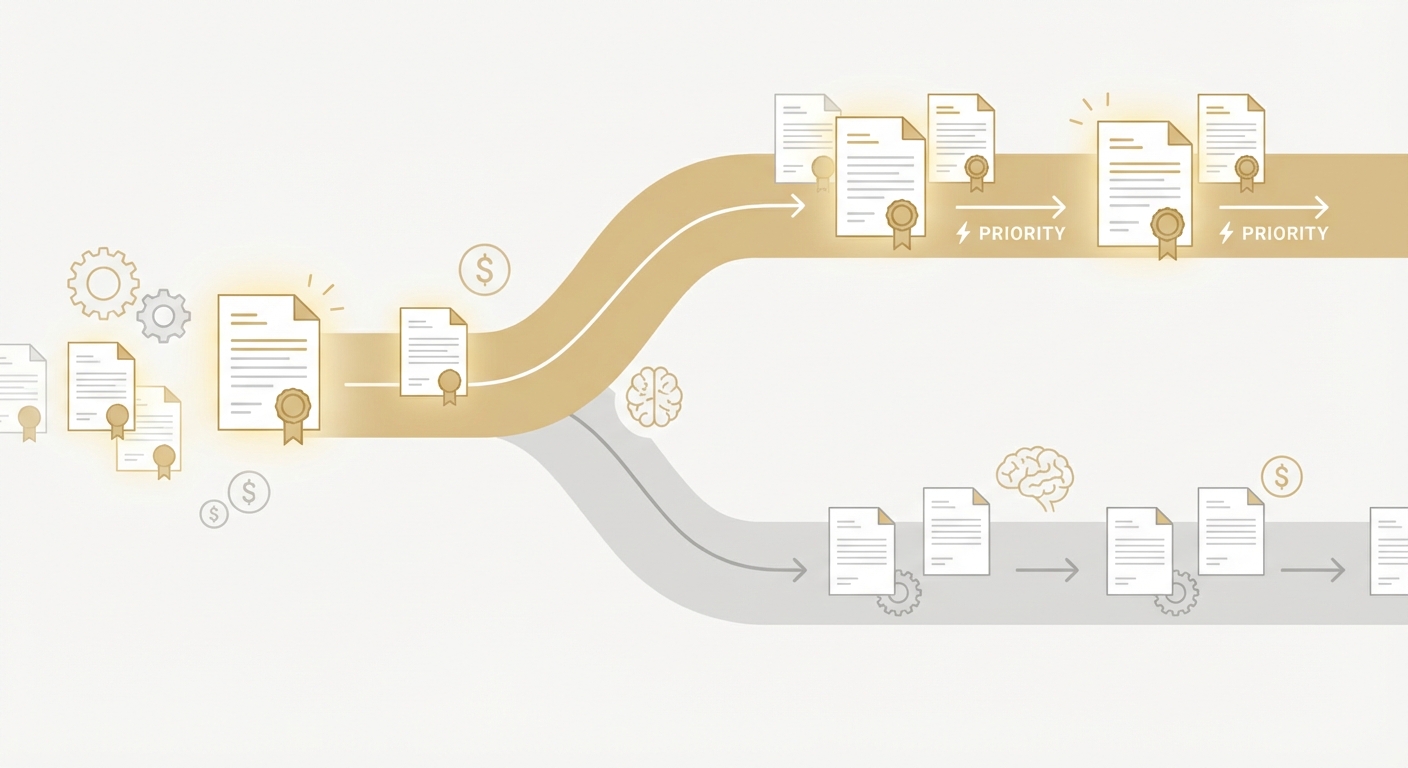
Dental claims review automation is the use of AI agents to pre-check, validate, and package claims (codes, narratives, attachments) against payer rules before submission—catching errors early without slowing down your billing team. The goal is simple: increase first-pass acceptance, reduce denials and rework, and accelerate cash. For example, Smilist deployed Ventus AI agents for claim statusing, executing 3,000+ status checks per day—volume that would otherwise require multiple full-time coordinators.
Why this matters now: 2026 brings tighter payer rules, rising attachment requirements, and staffing constraints. Industry studies show that administrative automation across healthcare could eliminate billions in avoidable costs annually, freeing teams to focus on patient experience and high-value A/R follow-up (CAQH Index, 2023–2024). Dental organizations need quality control without adding headcount or cycle time—and browser-native AI agents can deliver exactly that.
In this guide, you’ll learn how dental claims review automation works, the hidden costs of manual QC, a head-to-head comparison of operating models, an implementation roadmap from pilot to scale, the ROI you can expect, and answers to the most common questions DSO leaders and billing managers ask.
The Hidden Cost of Manual Quality Control in Dental Billing
Manual claims review does protect quality—but it often becomes the bottleneck between completed treatment and clean submission. Coordinators jump between PMS, imaging systems, payer portals, and email to assemble the right codes, narratives, x-rays, perio charts, and EOB references. Each payer has slightly different rules for medical necessity wording, frequency limitations, and coordination-of-benefits nuances. The result is slow, inconsistent throughput and rising rework.
The impact compounds:
- Delayed cash conversion: Days in A/R creep upward when claims sit in review queues awaiting attachments, narrative edits, or portal logins that only one specialist can perform.
- Preventable denials: In broader healthcare, over 80% of denials are potentially avoidable with better front-end validation (Change Healthcare, 2020 Denials Index). The same root causes—eligibility, coding mismatch, missing documentation—translate to dental.
- Operational drag: Staff spend disproportionate time on low-skill, high-friction tasks like portal MFA, CAPTCHA, and downloading x-rays—tasks that don’t require clinical judgment but must be done precisely.
- Knowledge silos: Tribal knowledge about payer quirks lives in a few experts’ heads, leading to variability and coverage gaps when those team members are out or turnover occurs.
- Attachment complexity: More payers are requiring CDT code-specific attachments, and many still rely on outdated portals with unpredictable uptime and UX, multiplying manual touchpoints.
The risk isn’t just cash flow. It’s also quality variance. Two coordinators may interpret “sufficient evidence of fracture” differently for a crown replacement. Without a consistent, rules-driven approach, first-pass acceptance rates plateau, rework increases, and morale dips as teams spend evenings chasing the same issues. This is where automation—done safely—shifts from “nice to have” to “operational imperative.”
DSOs with 50+ locations save 40% on RCM costs in the first 90 days.
Request an Enterprise AssessmentThree Models for Dental Claims Review: A Head-to-Head Comparison
Modern dental organizations typically choose between three models to balance quality control, speed, and cost: in-house manual review, outsourced billing, or AI-agent-assisted review.
1. In-House Manual Review
Best for: Smaller groups with stable payer mixes and low claim volume.
- Pros: Direct oversight; institutional knowledge; close to providers.
- Cons: Scalability limits; dependency on key staff; slower cycle times; higher cost per claim; harder to standardize across locations.
2. Outsourced Billing Partner
Best for: DSOs seeking immediate capacity without internal hiring.
- Pros: Rapid staffing elasticity; some process standardization; potential after-hours coverage.
- Cons: Variable quality; less transparency; still largely manual; recurring vendor fees; knowledge remains external.
3. AI-Agent-Assisted Review (Browser-Native)
Best for: DSOs/large practices aiming for consistent, scalable QC with predictable costs.
- Pros: Speed at scale (thousands of actions/day), standardized rules, 24/7 throughput, no API integrations (works in payer portals and PMS via browser), handles MFA/CAPTCHA, integrates with Slack/Teams/Email, escalates edge cases to humans, and can make phone calls for exceptions. Strong auditability and reproducibility of steps.
- Cons: Requires upfront workflow mapping; change management to adopt a human-in-the-loop model; initial trust-building via pilot.
Manual vs. AI-Agent-Assisted Review: What Changes
| Dimension | Manual Review | Ventus AI-Agent-Assisted Review |
|---|---|---|
| Throughput | Limited by staff bandwidth and shift hours | Parallelized, 24/7 capacity aligned to claim volume |
| Consistency | Varies by reviewer | Policy- and checklist-driven, reproducible |
| Attachments & Narratives | Manually gathered, prone to misses | Auto-retrieved from PMS/imaging; validated to payer rules |
| Portal Work (MFA/CAPTCHA) | Time-consuming, interrupts flow | Handled natively with secure flows |
| First-Pass Acceptance | Plateaus with complexity | Improves as rules library learns |
| Visibility & Audit | Ad hoc notes, emails | Full activity log with timestamps and evidence |
| Cost per Clean Claim | Rises with volume | Declines with scale and reuse of rules |
Where AI agents stand out is on “messy middle” work: navigating inconsistent portals, retrieving attachments, and enforcing payer-specific evidence requirements. This is precisely where dental RCM automation compounds value—freeing coordinators to focus on exceptions, high-dollar claims, and better provider documentation at the source.
Implementation Roadmap: From Pilot to Scale
A smooth rollout doesn’t require a platform rip-and-replace. Browser-native agents operate in the same tools your team uses today. Here’s a proven, low-risk path:
- Define the pilot slice. Pick 1–2 payers and 2–3 claim types (e.g., crowns, perio SRP, endo) with known denial drivers. Set entry/exit criteria: target first-pass acceptance and cycle time.
- Map the current process. Document reviewer steps: data fields, narrative templates, attachment locations, payer portal touchpoints, and escalation rules. Capture “gotchas” your experts know.
- Codify rules and checklists. Translate policies into machine-readable checks: CDT-to-payer mapping, frequency limits, clinical evidence cues, COB documentation, and medical necessity phrases.
- Configure communications. Connect agents to Slack/Teams/Email for status updates, exception routing, and daily digests. Define who approves edge cases.
- Go live under supervision. Start in shadow mode for 2–3 days (agents review; humans submit), then move to assisted mode (agents prepare; humans confirm), and finally to auto-submit for well-understood scenarios.
- Measure and tune weekly. Track first-pass acceptance, touch time, rework volume, and days in A/R. Add new payer rules as they appear; capture learnings into permanent checklists.
- Scale by payer and procedure. Expand to adjacent claim types and payers, then add upstream checks (eligibility, plan frequency) and downstream tasks (statusing, appeal kits).
Common pitfalls to avoid:
- Vague success criteria: Without clear pre/post baselines, it’s hard to prove value. Start with 1–2 metrics per claim type.
- Over-automation on day one: Automate the 60–70% most standardized steps first; keep humans for judgment-heavy edge cases.
- Ignoring provider documentation: If narratives are weak, no amount of automation rescues quality. Pair claims review with better clinical templates.
- Under-communicating to staff: Position agents as teammates that remove drudge work, not replacements.
Success factors we see repeatedly:
- Browser-native execution: No API dependency means faster start and full portal coverage.
- Security-by-design: SOC 2 Type II, HIPAA compliance, credential vaulting, and least-privilege access.
- Human-in-the-loop guardrails: Exceptions routed to experts; agents call payers for clarifications when needed.
- Rapid iteration: Weekly reviews to lock in quick wins and expand confidently.
"Ventus stands out from the noise in the AI and automation market. Their approach allows them to ramp up quickly in the messy middle of RCM."
— Philip Toh, Co-founder & President, Smilist
Smilist’s experience illustrates the scaling effect: agents executed over 3,000 claim status checks daily—work equivalent to multiple full-time coordinators—while the team focused on resolving exceptions and improving documentation quality.
ROI Reality Check: What DSO Leaders Actually Achieve
You should expect measurable, operations-focused outcomes within weeks, not quarters:
- Faster cash conversion: Reduced review queue time means cleaner submissions sooner and fewer pay-and-chase loops.
- Higher first-pass acceptance: Rules-driven checks catch missing narratives, x-rays, perio charts, and COB evidence pre-submission.
- Lower cost per clean claim: Automation absorbs repetitive labor, enabling each coordinator to oversee more volume.
- Denial reduction and faster rework: When denials occur, prebuilt evidence kits accelerate appeals.
- Team satisfaction: Less swivel-chair work, more problem solving and patient financial communication.
Key metrics to track:
- First-pass acceptance rate (FPA) by payer and procedure family
- Average touch time per claim and % of claims requiring human intervention
- Days in A/R (focus on 0–30 and 31–60 buckets)
- Denial rate and top 5 denial reasons with trendlines
- Cost-to-collect normalized per clean claim
Timeline to results:
- Quick wins (1–2 weeks): Stabilize attachment completeness; eliminate portal login drags; daily digests in Slack/Teams.
- Material gains (30–45 days): Lift in FPA; reduction in manual touch time; earlier reimbursements visible in A/R aging.
- Scale benefits (60–90 days): Expanded payer coverage; consistent playbooks for complex procedures; measurable impact on cost-to-collect.
Smilist’s throughput example—3,000+ daily status checks—shows what happens when agents take the repetitive load so your coordinators focus where human judgment creates value. If your organization also handles medical RCM, extending similar automation patterns into prior auth and eligibility on the medical side can compound ROI; see our approach to medical RCM automation.
See why scaling DSOs trust Ventus AI to automate claim statusing, denials, and AR follow-up.
Request a Demo and Free RCM AuditFrequently Asked Questions
How does dental claims review automation work?
It works by having AI agents replicate a coordinator’s browser steps to validate claims against payer rules, gather attachments, and prepare submissions. Agents log into PMS, imaging, and payer portals, check codes and narratives, retrieve x-rays/perio charts, and flag or fix gaps. They handle MFA/CAPTCHA securely, post updates in Slack/Teams/Email, and escalate exceptions. For compatible scenarios, agents can also submit claims and perform claim statusing end-to-end.
How much does it cost, and how should I think about ROI?
It’s typically priced to be neutral-to-positive versus your current cost per clean claim, with savings compounding as volume grows. The ROI lens is: cost per clean claim, lift in first-pass acceptance, reduction in touch time, and days-in-A/R improvement. Customers also value regained capacity—e.g., Smilist’s 3,000+ status checks/day—without adding FTEs. We’ll baseline your metrics in a pilot and project payback before scaling.
How long does implementation take?
Under 7 days for a focused pilot. Because agents are browser-native (no API builds), we configure workflows rapidly, connect Slack/Teams, and start in shadow mode within days. Many customers reach assisted or auto-submit on targeted claim types in week 2, adding payers and procedures in weeks 3–6 based on results and comfort.
Is it HIPAA and SOC 2 compliant? How is security handled?
Yes—Ventus is HIPAA compliant and SOC 2 Type II certified. Agents use secure credential vaulting, least-privilege access, and auditable logs of every action. MFA and CAPTCHA flows are handled within approved security patterns. All PHI stays within compliant boundaries, with role-based access controls and activity monitoring designed for dental RCM operations.
What results can my DSO expect in the first 60–90 days?
Most DSOs see faster cycle times, higher first-pass acceptance, and lower manual touch per claim within 30–45 days, with compounding gains by 60–90 days. Expect clearer insight into top denial reasons, stronger attachment completeness, and steadier A/R. Smilist’s 3,000+ daily status checks demonstrate how agents free teams for exception handling and patient-facing work.
Can the agents handle complex cases like COB, frequency limits, and narratives?
Yes—those are prime use cases. Agents cross-check frequency limits, verify COB documentation, standardize medical necessity narratives, and ensure required attachments (x-rays, perio charts) are present. Edge cases that require clinical judgment route to human reviewers, with agents drafting packets or notes to speed final decisions.
Do we need APIs or vendor integrations to start?
No—agents work via browser-native automation in the tools and portals you already use. That’s why pilots go live quickly and can cover payers with poor or no APIs. As your rules evolve, we update checklists without waiting on vendor roadmaps.
Can agents communicate with my team and payers directly?
Yes—agents post updates in Slack, Microsoft Teams, or Email, and they can make phone calls to payers for status checks or to resolve exceptions. You set the escalation rules, so humans stay in the loop for approvals or sensitive conversations.
Your Next Move: Action Plan for This Quarter
- Baseline the problem: Pull 8–12 weeks of data on first-pass acceptance, top denial reasons, and average touch time by payer/procedure.
- Select the pilot slice: Choose 1–2 payers and 2–3 procedures with frequent attachments or narrative needs (e.g., crowns, SRP, endo).
- Codify rules quickly: Turn your best reviewers’ checklists into clear do/don’t rules and narrative templates.
- Stand up communications: Connect Slack/Teams/Email so everyone sees progress and exceptions in real time.
- Run a 2–4 week pilot: Target measurable lifts in attachment completeness, first-pass acceptance, and reduced touch time.
Your team doesn’t need to settle for a trade-off between quality control and speed. AI agents act as reliable teammates that enforce your rules, at scale, without bottlenecks. → See how it works on your payer mix — Book a 30-minute demo
References and further reading:
- CAQH Index (2023/2024): Administrative automation savings across U.S. healthcare, including dental
- Change Healthcare (2020 Denials Index): Majority of denials are potentially avoidable; front-end validation matters
Explore related success stories in our customer stories, or dive deeper into our approach to dental RCM automation.
Ready to Transform Your Dental RCM?
See how Ventus AI agents can automate your claim denial management and AR follow-up across all your locations in under 7 days—no complex integrations required.
Book Your Free Demo
Enterprise AI Automation for Healthcare RCM
Written by the Ventus AI team — healthcare RCM practitioners, automation engineers, and former revenue cycle leaders building AI agents that work as teammates alongside billing teams. Ventus is SOC 2 Type II certified and HIPAA compliant.