
Comparing dental revenue cycle software in 2026? See models, ROI, and a Smilist case with 3,000+ daily status checks to speed cash and cut AR delays.
What is dental revenue cycle software?
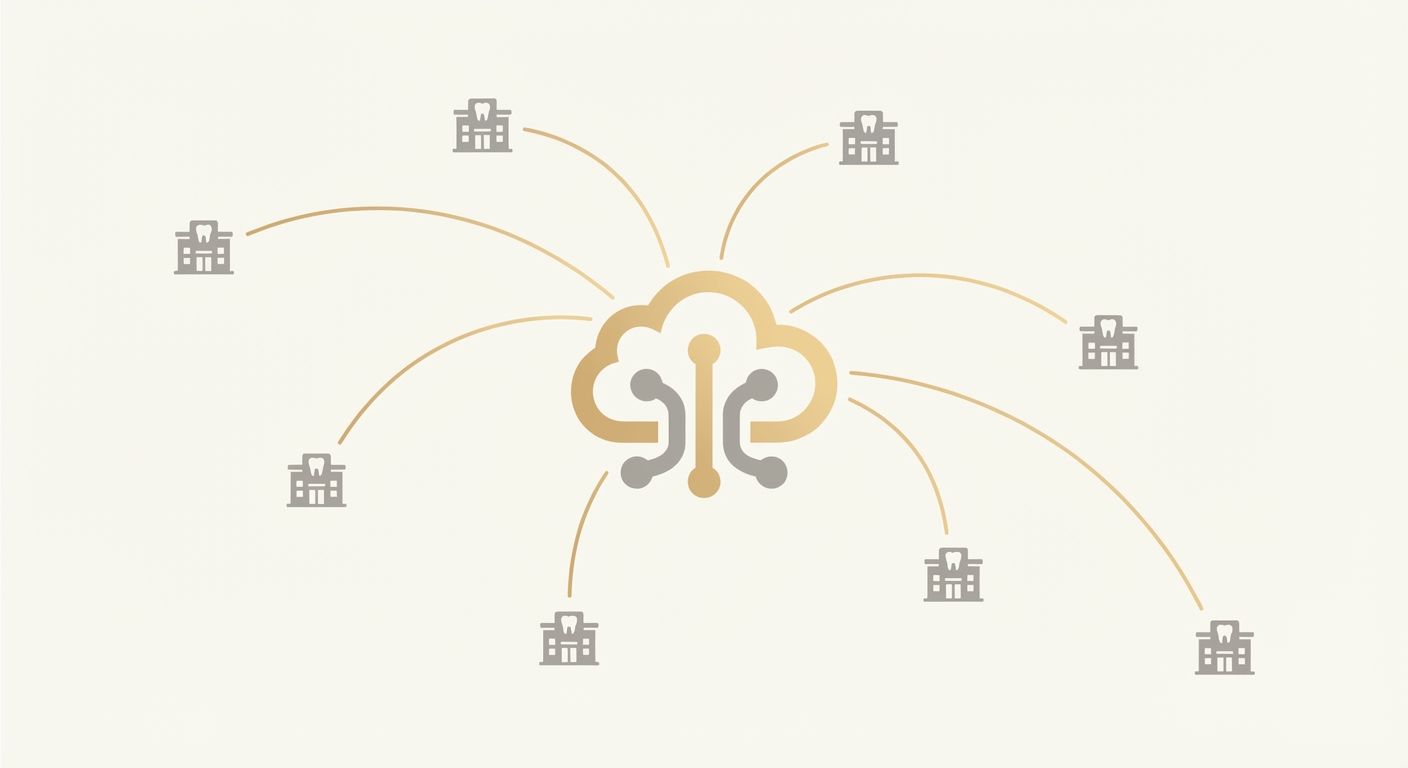
Dental revenue cycle software is a set of tools that streamlines how dental practices and DSOs verify coverage, submit claims, check status, resolve denials, post payments, and collect patient balances. The goal is simple: faster, more predictable cash flow with fewer touches per claim. Modern approaches increasingly combine traditional RCM platforms with AI agents that work across payer portals and clearinghouses to lift throughput and reduce backlog. For example, Smilist executes 3,000+ daily claim status checks using AI agents—volume that would otherwise require multiple full-time coordinators.
Why this matters in 2026: payer portals now change frequently, MFA and CAPTCHA are standard, and payer call wait times remain long. Labor churn and cost pressures make it hard to staff consistently, while DSOs keep adding locations and payers. This guide compares the main models you’ll evaluate this year—traditional software, outsourcing, and AI agent teammates—so you can choose the mix that fits your payer mix, growth plan, and budget.
We’ll cover where manual work hides costs, how the leading approaches differ, what implementation really takes, and the ROI benchmarks DSO leaders track. You’ll also find an at-a-glance comparison table and a practical action plan you can execute this quarter.
The hidden cost of manual dental billing in 2026
Manual dental billing creeps in where you least expect it: portal logins, benefit breakdowns without usable APIs, attachments that fail, payer phone calls, and denial follow-ups that get deferred when new claims pile up. Each manual touch adds minutes; multiplied across thousands of monthly claims, days in AR stretch, write-offs grow, and teams burn out.
Common 2026 realities we hear from DSO executives and billing leads:
- Portal-first payers: Many plans push providers to portals for claim status, attachments, and reconsiderations. Frequent UI changes break macros and simple RPA scripts.
- Security friction: MFA resets, CAPTCHA challenges, and device trust prompts interrupt batch work and slow off-shore teams.
- Denial complexity: Reason codes vary by payer and plan. Without structured capture at scale, appeals are inconsistent and learning loops never improve.
- Labor variability: Coordinators turn over, training takes weeks, and productivity ramps lag. Peak periods (benefit resets, seasonal volume) trigger overtime and backlog.
- Phone wait times: Calling payers to confirm status or appeal can eat 20–45 minutes per case, stranding staff on hold.
Industry benchmarks consistently show that automating transactions like eligibility, claim status, and remits removes the majority of manual cost and time per interaction. The CAQH Index has reported that moving from manual to digital channels cuts administrative time and dollars dramatically across eligibility, claim status, and remittance advice—savings that apply to dental as much as medical when portals dominate workflows. Even where EDI is adopted, exceptions still force browser work and calls that software alone doesn’t touch.
As a result, teams are exploring AI agents that behave like trained teammates—navigating portals in a browser, handling MFA and CAPTCHAs, and escalating edge cases in Slack or Teams. DSOs that deploy dental RCM automation from Ventus AI often start with claim statusing and denial chases, where the gap between need and staff capacity is stark.
DSOs with 50+ locations save 40% on RCM costs in the first 90 days.
Request an Enterprise AssessmentThree models for dental billing: a head-to-head comparison
Selecting the right approach starts with the work itself. Eligibility, claim submissions, attachments, status checks, denial management, and patient billing each have different automation potential. Below are the three dominant models and when each excels.
1. Traditional dental RCM software (in-house)
- Best for: Clinics with stable volumes, strong in-house teams, and standardized payer mixes.
- Pros:
- Consolidated workflows: One system to submit, post, and report.
- EDI efficiencies: Eligibility and remits flow into queues with rules.
- Data ownership: Instant access to historical claim data.
- Cons:
- Portal gaps: Software often stops where EDI ends; portals still need humans.
- Change management: Upgrades, payer-mapping updates, and new locations strain admins.
- Scalability limits: Throughput scales linearly with headcount.
2. Outsourced billing (BPO/RCM vendors)
- Best for: DSOs wanting to offload staffing and training for routine work.
- Pros:
- Labor flexibility: External team absorbs hiring and turnover.
- Defined SLAs: Predictable daily output for core tasks.
- Extended hours: Some vendors operate beyond clinic hours.
- Cons:
- Quality variability: Outcomes depend on vendor playbooks and assigned staff.
- Portal friction remains: Humans still face MFA/CAPTCHA and UI shifts.
- Less agility: Process tweaks and payer pilots can take weeks to roll out.
3. AI agent teammates (Ventus)
- Best for: DSOs seeking to scale the “messy middle” of RCM—portal work, status checks, denials, AR chases—without adding headcount.
- Pros:
- Browser-native automation: Agents work in payer portals and clearinghouses with no APIs required.
- Security-aware: Handles MFA, CAPTCHAs, and device trust flows.
- Human-in-the-loop: Escalates edge cases in Slack/Teams/Email; can place phone calls for exceptions.
- Rapid deployment: Under 7 days to go live; SOC 2 Type II and HIPAA compliant.
- Scales on demand: Add volume or new payers without hiring cycles.
- Cons:
- Process clarity needed: Best results when SOPs and exception rules are explicit.
- Change governance: As agents surface new insights, teams must adapt policies.
Manual vs. software vs. outsourcing vs. Ventus AI agents
| Capability/Metric | Manual Processes | Traditional Dental RCM Software | Outsourced Billing BPO | Ventus AI Agents |
|---|---|---|---|---|
| Setup time to first results | Weeks to hire/train | 4–12 weeks to implement | 4–8 weeks to onboard | Under 7 days |
| Claim status throughput | Low (tens/day per person) | Medium (EDI helps; portals still manual) | Variable by team | High (thousands/day; Smilist runs 3,000+ status checks daily) |
| Handles MFA/CAPTCHA | No | Limited (stops at portal) | Human-dependent | Yes (browser-native) |
| Resilience to portal changes | Low | Medium | Medium | High (adaptive agent retraining) |
| After-hours coverage | No | No | Sometimes | Yes (24/7 if desired) |
| Communication | Email/phone | In-app + email | Email/portals | Slack, Teams, Email; agent updates and escalations |
| Exception handling | Ad hoc | Queues/rules | Vendor playbooks | Human-in-the-loop review + agent callouts |
| Compliance | Varies | Varies by vendor | Varies | HIPAA + SOC 2 Type II |
| Typical payback | Uncertain | Months | Months | Often within 1–2 quarters (volume-dependent) |
Implementation roadmap: from pilot to scale
A good rollout balances speed with control. Below is a field-tested approach DSOs use to get live fast and scale confidently.
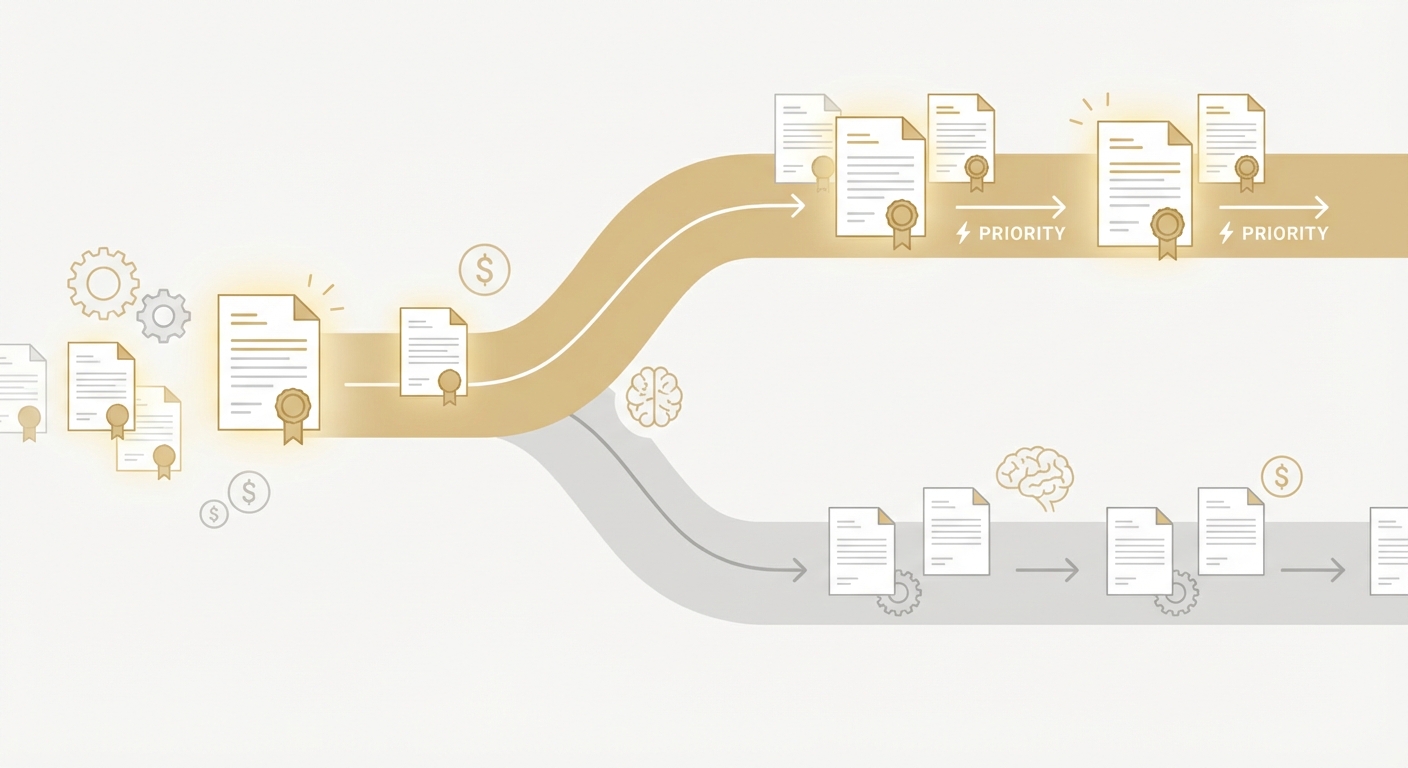
- Pick one high-yield workflow. Claim statusing or denial chases deliver quick wins because volume is high and rules are clear.
- Prioritize top payers by AR impact. Rank by open balance, denial rate, and follow-up difficulty. Start with 3–5 payers.
- Define SOPs and exception rules. Clarify when to escalate, how to label denials, and what triggers a phone call to the payer.
- Connect communications. Agents should post updates to Slack or Teams channels and email summaries to managers daily.
- Credentials and security. Prepare portal logins and MFA plans. Browser-native agents should rotate MFA as your staff would.
- Baseline metrics. Capture current status rate, days in AR, denial rate, and touches per claim.
- Go live in a controlled pilot. 1–2 locations or a subset of claim types; hold daily 15-minute stand-ups to triage exceptions.
- Measure, learn, expand. After 2–3 weeks, expand to more payers and add adjacent workflows like eligibility or payment posting.
Smilist exemplifies this approach. They deployed AI agents for claim statusing across payer portals and clearinghouses. The result: over 3,000 daily status checks that keep inventory current and free staff for high-value patient and provider tasks.
"Ventus stands out from the noise in the AI and automation market. Their approach allows them to ramp up quickly in the messy middle of RCM."
— Philip Toh, Co-founder & President
Implementation pitfalls to avoid:
- Vague exception paths: If escalations aren’t defined, agents will pause and humans will rework cases later.
- Credential drift: Uncoordinated password/MFA resets can stall throughput. Centralize credential governance.
- No feedback loop: Without weekly reviews, new payer quirks and denial patterns aren’t codified into the agent’s playbook.
Success factors we see repeatedly:
- Tight daily cadence: Short stand-ups ensure exceptions are cleared and rules evolve fast.
- AR-first prioritization: Focus agents on the highest-dollar, oldest buckets first.
- Unified labeling: Standard denial reason codes and disposition notes power analytics and process fixes.
- Champion ownership: One operations lead accountable for the pilot accelerates decisions and scaling.
Explore how agents slot into your workflows on our overview of dental RCM automation, or browse related customer stories.
ROI reality check: what DSOs actually achieve
Leaders don’t buy technology—they buy outcomes. Based on real deployments and industry benchmarks, here’s what to expect and what to track.
Outcomes that matter:
- Faster cash conversion: Current-period claims get statused within 24–72 hours, shrinking uncertainty windows.
- Backlog compression: Aged AR shrinks as high-dollar claims surface and resolve sooner.
- Lower cost per claim: Fewer manual touches and less overtime for routine portal work.
- Happier teams: Coordinators spend more time on complex appeals and provider support, not browser drudgery.
Metrics to track from day one:
- Status coverage: Percent of claims with a documented status in 72 hours.
- Aged AR: Movement in 30/60/90+ day buckets by payer.
- Denial rate and disposition speed: Time from denial to appeal or corrected claim.
- Touches per claim: Manual interactions per resolved claim.
- Cash posted within period: Proportion of payments posted in the same month of service.
Timelines you can plan around:
- Quick wins (1–2 weeks): See throughput gains on targeted payers; agent updates flow in Slack/Teams.
- 30–45 days: Backlog drops; status coverage and denial turnaround visibly improve.
- Quarter 1: Payback often realized, especially when combining status checks with denial chases. Smilist’s 3,000+ daily status checks illustrate the scale available when agents take the repeatable load.
See why scaling DSOs trust Ventus AI to automate claim statusing, denials, and AR follow-up.
Request a Demo and Free RCM AuditFrequently Asked Questions
How does dental revenue cycle software with AI agents work?
It works by combining your existing RCM system with browser-native AI agents that complete portal tasks end-to-end. Agents log in, handle MFA and CAPTCHAs, navigate payer portals, capture statuses and attachments, and escalate edge cases via Slack, Teams, or Email. With Ventus AI, agents also place phone calls for exceptions, maintain audit trails, and run after-hours to keep queues current. This augments staff, not replaces them, so humans focus on judgment-heavy appeals and provider support.
How much does this cost and how do we calculate ROI?
Pricing is typically volume-based and aligned to the workflows automated; ROI is calculated from avoided overtime, reduced touches per claim, and faster cash conversion. Many DSOs see payback within one to two quarters when starting with claim statusing and denials because those volumes are large and repetitive. We’ll baseline your current costs, set SLAs, and model scenarios during a 30-minute discovery. You can schedule a demo to get an exact plan for your payer mix.
How long does implementation take for Ventus AI agents?
Under 7 days for a focused pilot. Teams identify 3–5 payers, provide portal credentials, and define exception rules; agents then run in production with daily Slack/Teams updates. Smilist ramped quickly in this “messy middle,” enabling 3,000+ daily status checks without waiting on new APIs or vendor integrations. After 2–3 weeks, most DSOs expand to more payers and add adjacent workflows like eligibility or denials.
Is Ventus compliant and secure for PHI?
Yes—Ventus is HIPAA compliant and SOC 2 Type II certified. Agents operate in secure browser environments, handle PHI with strict access controls, and maintain detailed audit logs of every action. Because automation is browser-native, no payer APIs or data extracts are required, reducing integration risk. We execute BAAs, support SSO where available, and follow least-privilege principles to protect your data.
Can agents handle MFA, CAPTCHAs, and portal changes?
Yes—handling MFA, CAPTCHAs, and shifting portal UIs is core to the approach. Agents request codes via your normal channels, pass challenges, and adapt to layout changes without breaking entire workflows. When exceptions occur, they escalate in Slack/Teams and can place phone calls to resolve cases that require payer intervention. This resilience is why AI agents outperform simple RPA scripts in 2026.
What results should we expect in the first 60–90 days?
Expect higher status coverage (within 24–72 hours), visible backlog reduction in 60–90 day buckets, and fewer manual touches per claim. DSOs typically see faster denial dispositions and improved collector productivity because agents surface the right work at the right time. Smilist’s 3,000+ daily status checks show the attainable scale when agents take repeatable tasks, freeing staff for complex appeals and patient service.
How does this compare to outsourcing our billing?
AI agents complement or replace parts of outsourcing by automating portal-heavy, repetitive work with consistent quality and 24/7 availability. Unlike pure BPO, agents don’t churn, and they document every step for audit. Many DSOs pair a smaller vendor or in-house team with agents to absorb spikes, keep status current, and reserve humans for nuanced cases. If you already outsource, agents can reduce vendor volume and cost while lifting SLA performance.
Will AI agents replace my billing team?
No—think of agents as reliable teammates that clear the repetitive load so your people can focus on complex problem-solving and provider/patient interactions. In practice, coordinators shift from clicking through portals to supervising exceptions, improving appeals, and partnering with clinics. This improves morale and creates a stronger career path while lifting throughput and cash predictability.
Your Next Move: Action Plan for This Quarter
- Pick your first workflow: Target claim statusing or denials on your top five payers by open AR.
- Set clear guardrails: Define escalation criteria, labeling, and when agents should place phone calls.
- Baseline KPIs today: Status coverage in 72 hours, touches per claim, aged AR by payer, denial turnaround.
- Stand up a pilot: Go live in under a week with browser-native agents, daily Slack/Teams updates, and a weekly review.
- Scale with intent: Add payers and workflows once quick wins are locked in; document new rules as agents surface insights.
Ready to see results on your payer mix? → See how it works on your payer mix — Book a 30-minute demo
Ready to Transform Your Dental RCM?
See how Ventus AI agents can automate your claim denial management and AR follow-up across all your locations in under 7 days—no complex integrations required.
Book Your Free Demo
Enterprise AI Automation for Healthcare RCM
Written by the Ventus AI team — healthcare RCM practitioners, automation engineers, and former revenue cycle leaders building AI agents that work as teammates alongside billing teams. Ventus is SOC 2 Type II certified and HIPAA compliant.