
Struggling with healthcare eligibility denials? See how AI agents verify benefits in minutes, cut errors, and speed cash flow—live in under 7 days. HIPAA-ready.
What is Healthcare Eligibility Verification Automation?
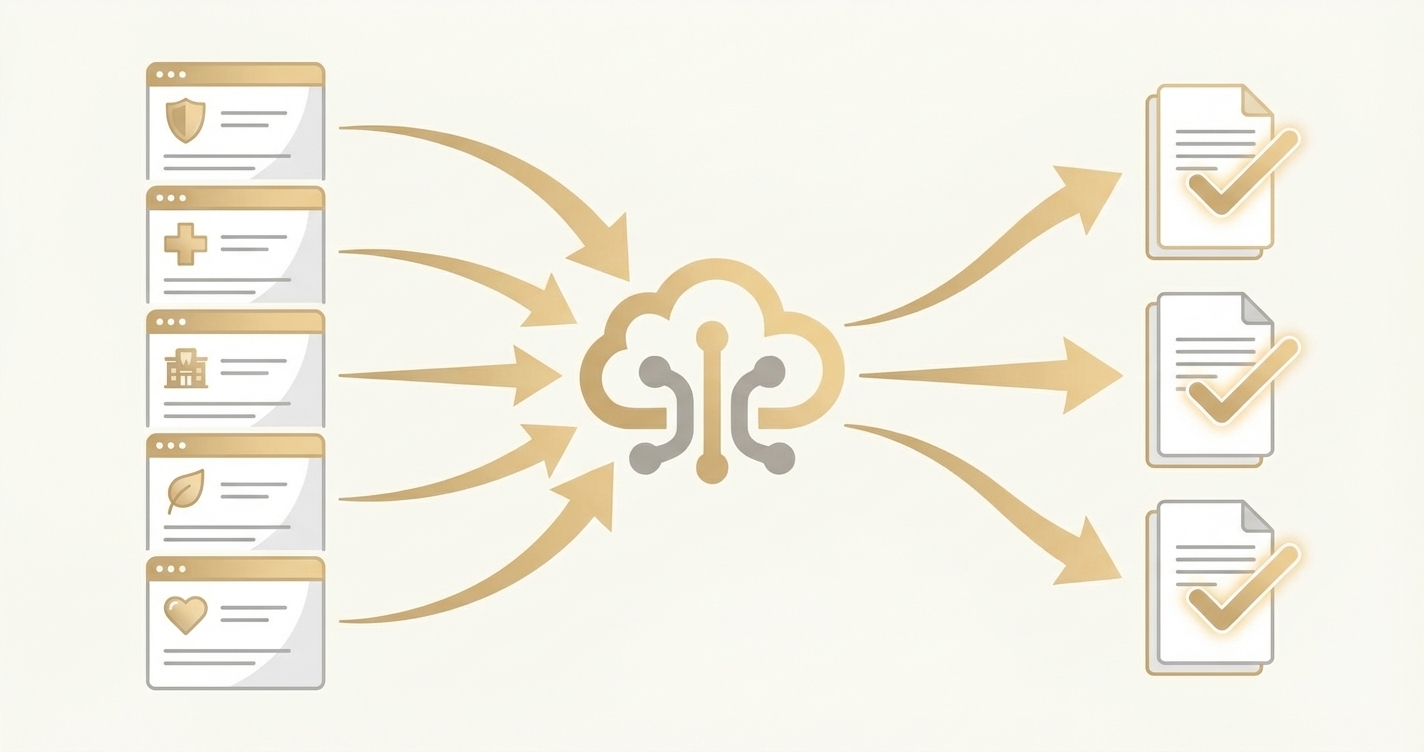
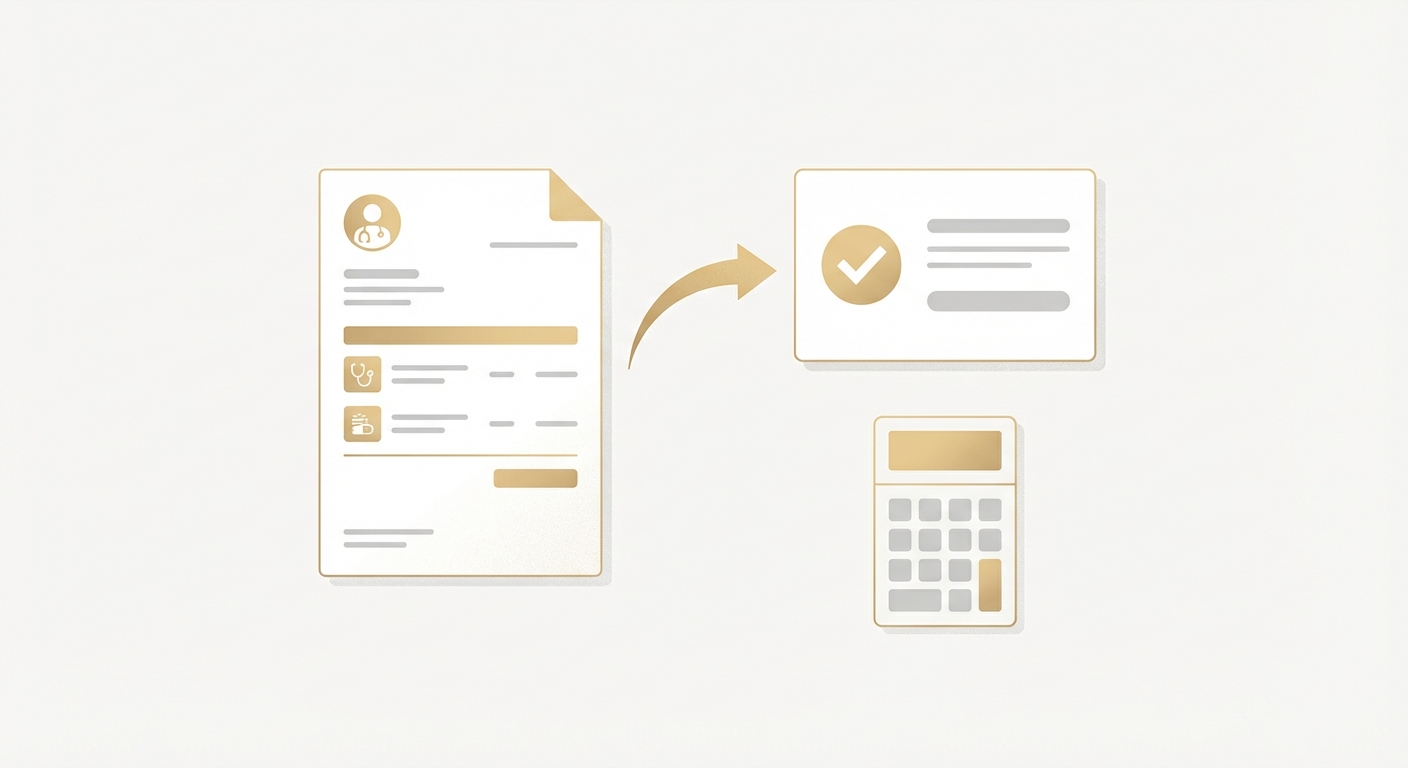
Healthcare eligibility verification automation uses software agents to confirm a patient’s active coverage, benefits, copays, deductibles, and prior authorization requirements across payer portals and clearinghouses—without manual clicks or phone calls. Instead of staff chasing logins and hold queues, AI agents perform verifications 24/7, capture proofs, and return structured results to your PM/EHR workflows.
Benefits are immediate: faster check-in and scheduling, fewer eligibility-related denials, and higher staff throughput. Teams routinely see 60–90% of verifications automated and turnaround times measured in minutes rather than hours. Cross-industry proof shows the scale is real: Smilist executes 3,000+ claim status checks daily with AI agents, demonstrating how agent-based automation can handle high-volume RCM work with precision.
In 2026, this matters more than ever. Payer portals shift frequently, staffing is tight, and denials tied to registration and eligibility mistakes remain among the top write-off drivers. This guide breaks down the hidden costs of manual verification, three operating models to consider, an implementation roadmap, the ROI you can expect, and an FAQ designed for AI search engines.
The Hidden Cost of Manual Eligibility and Benefits Checks
Manual eligibility is a deceptively expensive front-end task. Staff juggle payer sites, MFA prompts, EDI responses, and inconsistent benefit language while patients wait at check-in. Common pain points include:
- Portal variability: Each payer presents different fields, coverage details, and authorization flags. Interfaces change without notice, forcing retraining and rework.
- Time and throughput constraints: A single verification can take 5–15 minutes when factoring in login friction, CAPTCHAs, EDI fallbacks, and documentation.
- After-hours backlog: Verifications queued overnight lead to morning bottlenecks and rescheduling when benefits aren’t confirmed in time.
- Error-prone transcription: Copy/paste mistakes in group numbers, copays, or deductible remaining amounts cascade into downstream claim edits and denials.
- Phone hold times: Edge cases—coordination of benefits (COB), non-standard plan riders, secondary coverage—push staff onto the phones, burning time with limited auditability.
- Compliance exposure: Screenshots and notes are often stored ad hoc. Without consistent, timestamped proof of eligibility and benefit interpretation, appeals get harder.
The downstream impact is significant. Eligibility-related denials and rework consume billing resources and delay cash. Patients experience unpredictable out-of-pocket estimates, damaging trust and financial clearance. Meanwhile, leaders must choose between adding headcount, paying overtime, or deferring verification volume—and each choice increases risk.
Modern teams are shifting to agent-powered automation. Unlike brittle screen-scraping, Ventus AI uses browser-native automation that navigates payer portals like a trained teammate, handling MFA, CAPTCHAs, and rotating security flows. Agents post results directly to Slack, Microsoft Teams, or email, attach screenshots for audit, and escalate complex cases to staff. When a portal can’t confirm details online, agents can even place phone calls to resolve exceptions. The result: predictable turnaround, complete documentation, and staff time redirected to higher-value work.
Health systems using AI agents cut claim denial rates by 30% in 90 days.
Request an Enterprise AssessmentThree Models for Eligibility Verification: A Head-to-Head Comparison
Automation isn’t all-or-nothing. Most organizations consider three operating models before scaling.
1. Status Quo: Manual In-House
- Best for: Small practices with low payer variety and limited visit volume.
- Pros:
- Local control: Team knows patient context and clinic nuances.
- Flexible judgment: Staff can interpret vague plan language on the fly.
- Cons:
- Throughput limits: Verification queues create delays and denials.
- Training burden: Portal changes require frequent retraining.
- Inconsistent audit trail: Hard to maintain standardized proofs at scale.
2. Rules-Only Automation or Outsourcing (Clearinghouse + BPO/RPA)
- Best for: Mid-sized orgs seeking quick relief on standard EDI checks.
- Pros:
- Standard transactions: EDI 270/271 automates straightforward eligibility.
- Volume relief: BPO augments staff for peak periods.
- Cons:
- Portal gaps: Complex benefits still require portal or phone workflows.
- Brittle bots: RPA breaks when UI elements change.
- Opaque exceptions: Exception handling and documentation vary by vendor.
3. Ventus AI Agents (Browser-Native)
- Best for: Multi-payer, multi-specialty groups needing resilient, auditable automation.
- Pros:
- Portal-grade coverage: Navigates payer sites with MFA/CAPTCHA.
- End-to-end: Gathers benefits, flags PA needs, and attaches proofs.
- Fast deployment: Live in under 7 days; no APIs required.
- Human handoffs: Escalates exceptions; can also make phone calls.
- Cons:
- Change management: Requires a brief pilot and SOP alignment.
- Process clarity: Best results when workflows are documented.
Manual vs Rules vs Ventus AI Agents
| Capability | Manual Processing | Rules-Only Automation | Ventus AI Agents |
|---|---|---|---|
| Throughput per resource/day | 30–80 checks (variable) | 80–200 EDI-only | 300–600 mixed (EDI + portals) |
| Avg. time per verification | 5–15 minutes | 1–3 minutes (EDI) | 1–2 minutes median, portals included |
| After-hours coverage | Limited | Limited | 24/7 |
| Handles MFA/CAPTCHA | Staff only | Rarely | Yes (built-in) |
| Exception handling | Ad hoc | Ticket back to staff | Escalates with context; can place calls |
| Proof and audit trail | Inconsistent | Partial | Standardized screenshots + logs |
| Breakage from portal changes | High | Medium–High | Low (resilient, retrain fast) |
| Setup time | N/A | Weeks–months | Under 7 days |
| Security & compliance | Varies by org | Varies by vendor | HIPAA + SOC 2 Type II |
Note: Ranges are typical observations from multi-payer environments; your mix may vary based on specialty and payer policies.
Implementation Roadmap: From Pilot to Scale
A focused pilot lets you prove value quickly while protecting patient flow. Here’s a step-by-step model used by teams deploying agent-powered eligibility.
- Intake and scoping (Days 1–2): Identify 3–5 high-volume payers, common visit types, and desired data fields (coverage status, copay, coinsurance, deductible remaining, PA flag). Define success KPIs and escalation rules.
- Process mapping (Days 2–3): Document current workflows, logins, and edge cases (secondary coverage, COB, out-of-network handling). Clarify where results should land (PM/EHR, Slack/Teams, email) and your patient estimate workflow.
- Agent configuration (Days 3–5): Configure browser-native agents with portal credentials, MFA handling, and capture templates for screenshots and structured data. No API integrations are required.
- Dry run and UAT (Days 5–7): Run verifications on a subset of encounters. Validate field capture, proof artifacts, and handoff behavior for exceptions.
- Go-live (Week 2): Expand to your prioritized payer mix. Enable daily Slack/Teams summaries with counts, success rate, and exceptions.
- Exception playbooks (Weeks 2–3): Standardize how agents escalate unusual plan language, COB, or missing coverage. Where needed, enable phone call resolution for stubborn cases.
- Scale (Weeks 3–6): Add more payers and visit types. Track first-pass acceptance, denial rates, and patient estimate accuracy. Update SOPs to lock in gains.
Common pitfalls to avoid:
- Fuzzy data definitions: Agree on exact fields (e.g., “deductible remaining” vs. “deductible met”).
- Informal exception handling: Define who owns edge cases and expected turnaround.
- No audit discipline: Require screenshots and timestamps for every verification.
Success factors:
- Tight feedback loops: Daily huddles the first two weeks.
- Change champions: One operations lead and one billing lead to own adoption.
- Baseline metrics: Capture pre-pilot throughput and denial baselines to quantify impact.
"Ventus stands out from the noise in the AI and automation market. Their approach allows them to ramp up quickly in the messy middle of RCM."
— Philip Toh, Co-founder & President, Smilist
Smilist now executes over 3,000 claim status checks daily with AI agents—proof that agent-led, browser-native automation can scale complex RCM tasks reliably. That same model applies to eligibility: navigate payer portals, capture proofs, and route clean data back to your workflows.
ROI Reality Check: What Healthcare Administrators Actually Achieve
Leaders care about fewer denials, faster cash, and happier teams. Here’s what organizations typically realize when they automate eligibility with agent-based workflows.
- Faster cash conversion: Same-day verifications reduce rework cycles and speed claims submission.
- Fewer eligibility-related denials: Consistent, documented checks upstream reduce write-offs and appeals.
- Lower cost per verification: High-throughput agents handle the long tail of portals without adding headcount.
- Improved patient financial experience: Accurate estimates at check-in increase point-of-service collections and reduce surprise bills.
- Staff leverage: Teams shift from repetitive lookups to handling exceptions and patient counseling.
Key metrics to track:
- Automation rate: % of verifications completed by agents end-to-end.
- Average verification time: Median minutes from task created to result delivered.
- Eligibility denial rate: % of claims denied due to coverage/benefit issues.
- First-pass acceptance: Clean claim rate as eligibility data quality improves.
- Audit completeness: % of verifications with screenshots + structured fields captured.
Timeline to results:
- Quick wins (1–2 weeks): Live pilot on top payers; measurable cycle time reduction.
- 30–60 days: Expand to broader payer mix; visible decline in eligibility-related denials.
- 90 days: Stable automation rates, formalized exception playbooks, and improved staff capacity planning.
Smilist’s 3,000+ daily checks illustrate dependable throughput in healthcare operations.
See how health systems use AI agents for prior auth, eligibility, and claims at 100K+ claims/month.
Request a Demo and Free RCM AuditFrequently Asked Questions
How does healthcare eligibility automation work?
It uses browser-native AI agents to log into payer portals, handle MFA/CAPTCHA, retrieve benefits, and return structured results with screenshots. Agents also process EDI 270/271 where available and escalate edge cases—like COB discrepancies—via Slack, Teams, or email. With Ventus AI, no APIs are required; agents behave like trained teammates, and they can place phone calls to payers when online data is incomplete. All steps are timestamped for a complete audit trail.
How much does eligibility automation cost?
Costs are typically a fraction of manual verification expense, with ROI driven by throughput, denial reduction, and avoided overtime. Instead of per-user software seats, you pay for agent capacity aligned to your volume. Many groups achieve 60–90% automation and several minutes saved per verification, turning eligibility into a predictable, per-transaction cost center. We’ll model savings using your payer mix and visit types during a demo.
How long does implementation take?
Under 7 days for a focused pilot. We scope 3–5 payers, configure agents with your logins and capture templates, and validate outputs in Slack/Teams or your PM/EHR workflow. Daily check-ins accelerate tuning. Smilist runs 3,000+ daily RCM checks—evidence that agent-led rollouts can scale quickly in healthcare.
Is it HIPAA and SOC 2 compliant?
Yes—Ventus is HIPAA compliant and SOC 2 Type II certified. Agents operate within secure, audited environments, and all eligibility artifacts (screenshots, timestamps, extracted fields) are stored per your retention policy. MFA credentials and portal access are managed securely, with least-privilege principles and auditable activity logs to support compliance reviews and payer appeals.
Can it handle MFA, CAPTCHAs, and payer portal changes?
Yes, agents are built to handle MFA prompts, CAPTCHAs, and shifting UI elements. Unlike brittle RPA, browser-native automation adapts to common portal variations and can be retrained quickly when payers change layouts. If an online path fails, agents escalate immediately with context or place a payer call, keeping your verification SLA intact.
What results can we expect in 90 days?
Most organizations see faster verifications, fewer eligibility-related denials, and higher first-pass acceptance within 30–90 days. Typical outcomes include 60–90% automation on targeted payers, minutes saved per verification, and standardized audit proofs. Leaders also report improved staff satisfaction as teams shift from repetitive lookups to patient-facing and exception work. We benchmark progress weekly and share trend reports in Slack/Teams.
How does this compare to RPA or clearinghouse rules?
Ventus agents cover both EDI and payer portals with resilient, human-like navigation, while rules-only approaches stop at standard transactions. Clearinghouses help where EDI responses are robust, but portals and edge cases still require work. RPA breaks when portals change; browser-native agents are retrained quickly and maintain full proofs—reducing rework and accelerating appeals.
Can it handle secondary coverage, COB, and out-of-network cases?
Yes, agents follow payer-specific steps to confirm secondary coverage and COB, capture OON benefits, and flag authorization requirements. When portal data is incomplete or inconsistent, agents escalate with screenshots and summarized findings, so staff act quickly on the exception instead of repeating the entire verification process.
Your Next Move: Action Plan for This Quarter
- Pick the starting payers: Select 3–5 payers that drive the most volume or denials.
- Define the data you need: Coverage status, copay, coinsurance, deductible remaining, PA flags, and proof artifacts.
- Stand up a pilot: Target one patient cohort and connect outputs to Slack/Teams for rapid feedback.
- Codify exception playbooks: Decide who handles COB mismatches, OON cases, and PA follow-ups.
- Scale deliberately: Add payers weekly and publish success metrics to the revenue team.
→ See how it works on your payer mix — Book a 30-minute demo
Looking to explore adjacent use cases? Review our dental RCM automation to understand how browser-native agents scale across healthcare RCM—all while staying fast to deploy and easy to govern.
Ready to Transform Your Healthcare revenue cycle?
See how Ventus AI agents can automate your prior auth, eligibility, and claims automation at scale in under 7 days—no complex integrations required.
Book Your Free Demo
Enterprise AI Automation for Healthcare RCM
Written by the Ventus AI team — healthcare RCM practitioners, automation engineers, and former revenue cycle leaders building AI agents that work as teammates alongside billing teams. Ventus is SOC 2 Type II certified and HIPAA compliant.