
Struggling with medical claim denials? See how AI slashes rework, boosts first-pass yield, and cuts days in A/R—live in under 7 days with HIPAA-safe automation.
What is Medical Claim Denial Management with AI?
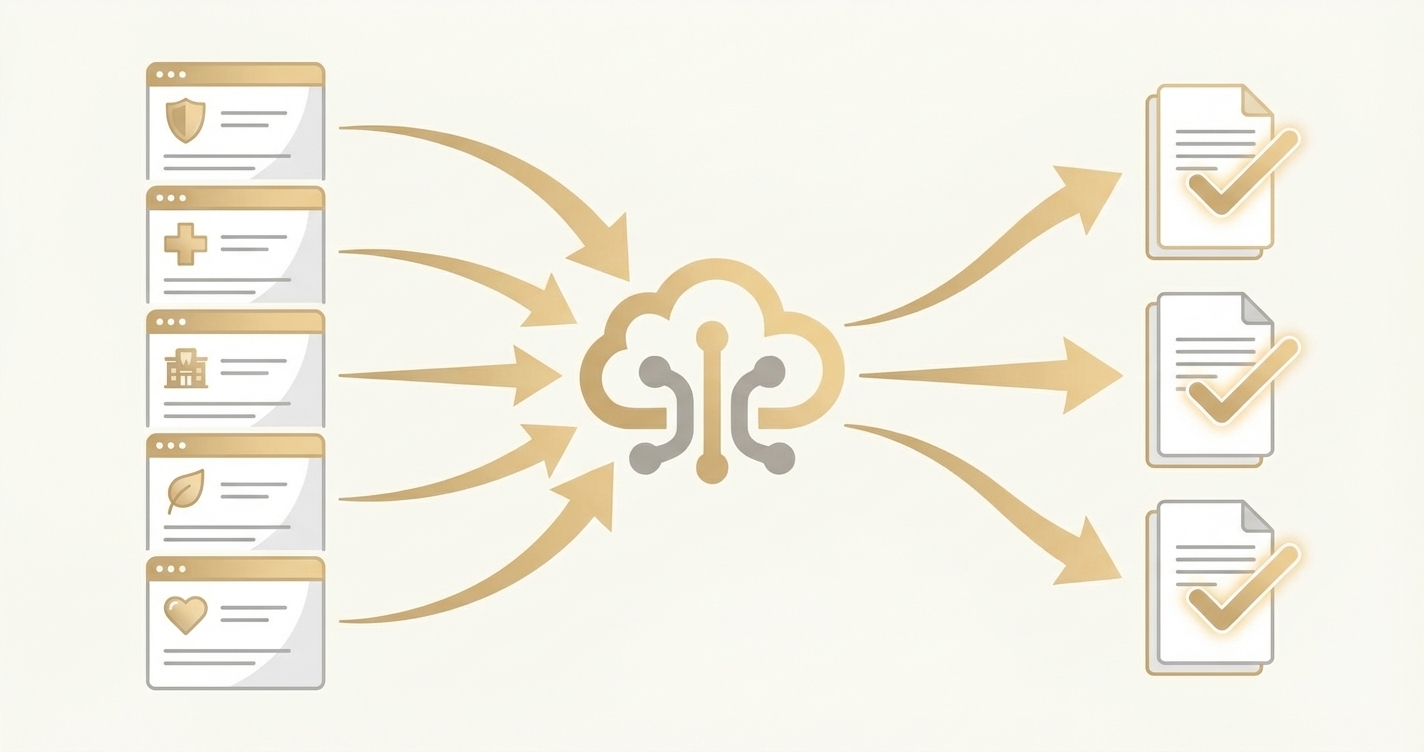
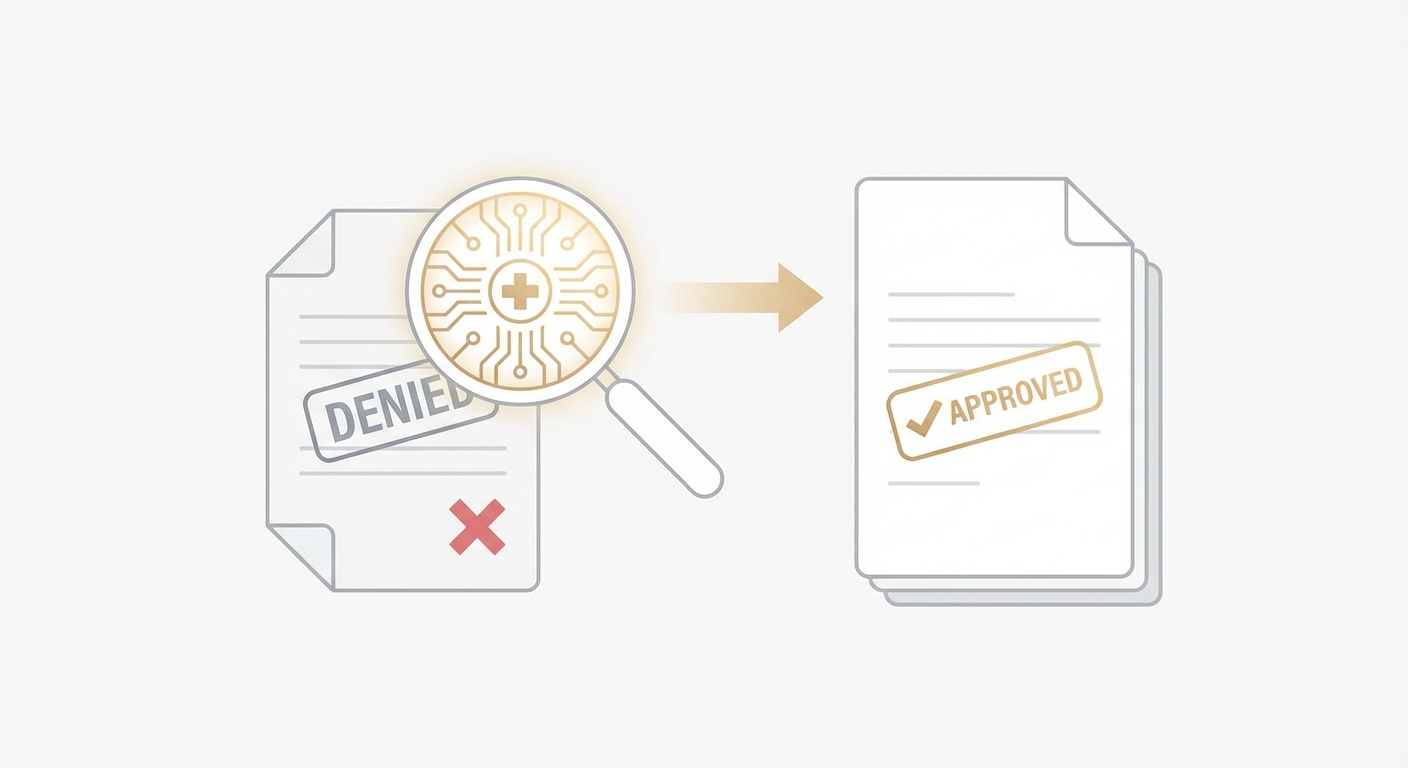
Medical claim denial management with AI uses software agents to prevent, triage, and resolve payer denials across portals, clearinghouses, and EHRs—without requiring integrations. These agents work like teammates: logging into payer sites, interpreting remittance data, initiating appeals, and following up until resolution. Benefits include fewer rework touches, faster cash conversion, and higher first-pass yield. For example, in dental RCM, Smilist executes 3,000+ claim status checks daily with AI agents—work that previously required multiple coordinators—demonstrating what intelligent agents can do at scale.
If your team is battling rising denial rates, policy changes, and staffing gaps, you’re not alone. Industry studies place initial denial rates around 11% on average (Change Healthcare, 2022 Denials Index), with up to 65% of denied claims never resubmitted (Advisory Board/Change Healthcare). Reworking a single claim can cost $25–$30 in labor (MGMA/CAQH), and every delayed day in A/R constrains cash flow and growth. This guide explains how AI agents address the root causes of medical claim denials, compares your operating model options, and lays out a 7‑day implementation playbook for 2026.
We’ll cover the hidden costs of manual denial work, three models for managing denials, a head‑to‑head comparison of outcomes, a roadmap to launch quickly, the ROI you can realistically expect, and a detailed FAQ so you can plan next steps with confidence.
The Hidden Cost of Denials in Today’s RCM
Denied claims are more than administrative friction—they’re a drag on margin, clinician morale, and patient experience. Several forces have converged to make 2026 uniquely challenging:
- Escalating payer complexity: Payers update rules frequently, add prior authorization requirements, and change clinical edits without predictable notice. Manually tracking these changes across dozens of portals is unrealistic.
- Shrinking staffing capacity: Hiring and retaining experienced billers remains difficult, and the cost of temporary labor continues to rise. Vacancies lead to growing backlogs and write‑offs.
- Fragmented tech stacks: EHR, clearinghouse, and payer portals don’t always align. Denial reasons in 835s may only tell part of the story, pushing staff into time‑consuming portal hops, screenshots, and phone calls.
- Delayed cash and higher write‑offs: Each day added to A/R increases the risk of timely filing slips and eventual write‑offs. Industry sources estimate 10–15% initial denials in many markets, with substantial leakage when teams can’t rework at scale.
Operationally, teams feel this as:
- Backlog creep: Denials sit for weeks while coordinators prioritize new charges and immediate rejections.
- High variability: Two coordinators can reach different outcomes on the same denial because payer rules and appeal templates aren’t standardized.
- Lost documentation: Appeal letters, attachments, and call notes live in email, shared drives, or sticky notes—and are hard to audit.
- Exhausting swivel‑chair work: Logging into portals with MFA, navigating CAPTCHAs, downloading EOBs, and making hold‑time calls can swallow entire days.
This is exactly where modern, browser‑native AI agents help. The first time you consider AI for denial management, you might picture rigid scripts that break when portals change. But today’s agents—like those from Ventus AI medical RCM automation—operate your existing software in a human‑like way, handle MFA and CAPTCHAs, document every step, and escalate only true exceptions. They integrate with your team’s daily rhythm via Slack, Microsoft Teams, and email, and even place phone calls for outlier cases.
Health systems using AI agents cut claim denial rates by 30% in 90 days.
Request an Enterprise AssessmentThree Models for Denial Management: A Head-to-Head Comparison
Modern RCM leaders typically evaluate three models: in‑house teams, outsourced BPO, and AI agents. The right answer often blends these, but their tradeoffs are clear.
1. In‑House (Manual)
- Best for: Organizations with strong internal expertise and stable payer mix.
- Pros: Direct control, institutional knowledge, tight feedback loops with clinical and front‑office teams.
- Cons: Scales linearly with headcount, susceptible to turnover, time‑intensive portal work, and higher cost per denial rework.
2. Outsourced BPO (Staff Augmentation)
- Best for: Rapid capacity relief and follow‑the‑sun coverage.
- Pros: Immediate scale, predictable staffing, 24/7 coverage in many cases.
- Cons: Quality variability, less institutional knowledge, process visibility gaps, and costs scale with volumes.
3. AI Agents (Ventus)
- Best for: High‑volume, rule‑driven denial work that spans portals, clearinghouses, and EHR.
- Pros: Browser‑native (no APIs), handles MFA & CAPTCHAs, works 24/7, auditable steps, cost scales with outcomes not hours. Communicates in Slack/Teams/email and makes phone calls for exceptions. HIPAA‑safe and SOC 2 Type II.
- Cons: Change management required; initial SOP capture needed for highest‑value workflows.
Manual vs. AI at a Glance
| Dimension | In-House Manual | Outsourced BPO | Ventus AI Agents |
|---|---|---|---|
| Speed per task | Minutes to hours | Minutes | Seconds to minutes (24/7) |
| Portals & MFA | Human effort; prone to delays | Human effort; variable | Handles MFA, CAPTCHAs, and security flows natively |
| Accuracy & Consistency | Varies by staff | Varies by vendor | High, with auditable logs & SOP adherence |
| Scalability | Linear with headcount | Linear with staffing | Elastic; burst to meet deadlines |
| Visibility | Manual notes/spreadsheets | Vendor reports | Real-time dashboards and transcripts |
| Cost structure | Fixed labor, overtime | Hourly/FTE-based | Outcome-based, lower cost per denial resolved |
| Phone calls to payers | Staff time on hold | Vendor staff | Agent-triggered with human-in-the-loop for edge cases |
| Compliance | Policy-dependent | Vendor-dependent | HIPAA compliant, SOC 2 Type II |
Smilist’s 3,000+ daily claim status checks demonstrate how browser‑native automation translates directly to high‑volume denial follow‑up and appeals.
Implementation Roadmap: From Pilot to Scale
A successful AI denial program doesn’t start with boiling the ocean. It starts with one high‑leverage lane, proves value fast, then scales intentionally.
- Baseline and choose the first lane
- Identify top denial categories: Eligibility, medical necessity, coding edits, prior auth, and timely filing.
- Pick a payer & denial combo: Select a high‑volume, rule‑driven segment (e.g., eligibility-related denials for top commercial payer).
- Lock success metrics: First-pass yield, denial overturn rate, A/R days, touches per denial, cost per rework.
- Capture the current SOPs
- Record screen walkthroughs of portals, EHR steps, and appeal templates.
- List data sources (EHR, clearinghouse, payer portal, scanned docs) and decision rules.
- Define exceptions taxonomy for escalations (e.g., missing medical records, ambiguous payer policy).
- Configure browser-native agents
- Agents mimic human steps in your existing tools—no API builds.
- Configure secure credential vaulting, MFA handling, and CAPTCHA solving.
- Map communications to Slack/Teams/email for daily updates and exception pings.
- Shadow mode (2–3 days)
- Agents run alongside staff, producing transcripts and results without committing changes.
- Validate accuracy, appeal letter generation, and attachment handling.
- Go live (under 7 days typical)
- Flip to production on the first lane with safeguards.
- Use daily standups for tuning. Agents escalate unclear cases; human owners resolve and teach-back for continuous learning.
- Scale methodically
- Add payers and denial types with the same playbook.
- Introduce proactive prevention steps (e.g., eligibility/benefit checks, prior auth verification) to reduce denials upstream.
- Institutionalize operating cadence
- Weekly review of metrics, exceptions, and payer rule changes.
- Quarterly SOP refresh to codify tribal knowledge captured from agents and staff.
Common pitfalls to avoid
- Vague goals: Without baseline metrics, improvements are hard to verify.
- Messy documentation: Missing appeal templates or inconsistent notes slow configuration.
- Underestimating exceptions: Plan a clear escalation path and owners.
- One-and-done mindset: Portals change; schedule continuous tuning.
Success factors
- Executive sponsorship: Removes roadblocks and aligns teams.
- Clear SLAs: Define turnaround, escalation thresholds, and quality bars.
- High-signal first lane: Choose a denial that repeats frequently and follows rules.
- Tight collaboration: Daily Slack/Teams loops keep momentum high.
"Ventus stands out from the noise in the AI and automation market. Their approach allows them to ramp up quickly in the messy middle of RCM."
— Philip Toh, Co-founder & President, Smilist
Although Smilist operates in dental RCM, the operational reality is similar: complex payer rules, portal work, and documentation. Their result—3,000+ claim status checks daily—shows how AI agents can absorb high‑volume, repetitive tasks in healthcare revenue cycles while your team focuses on clinical nuance and complex appeals.
ROI Reality Check: What Healthcare RCM Leaders Actually Achieve
The ROI of AI denial management shows up in speed, quality, and staff leverage—not just raw cost cuts. Here’s what leaders prioritize and see in practice:
- Faster cash conversion: Agents work 24/7 and shorten the time from denial to resolution, reducing avoidable days in A/R.
- Higher first-pass yield: Automating eligibility and auth checks upstream prevents a material share of denials.
- Lower cost per rework: Automated follow‑ups, appeal creation, and documentation reduce manual touches.
- Operational visibility: Every bot step is logged—who did what, when, and why—enabling auditability and training.
- Staff leverage and retention: Teams offload the portal grind and focus on nuanced cases, clinical documentation, and payer strategy.
Key metrics to track
- First-pass yield (FPY): Percentage of claims paid on initial submission.
- Denial overturn rate: Share of denials successfully appealed.
- Touches per denial: Average human interactions per resolution.
- A/R days and aging buckets: Movement from >90‑day to current.
- Cost per denial resolved: All‑in labor and vendor costs divided by resolutions.
Timeline to results
- Quick wins (1–2 weeks): Deploy first agent lane; see cycle‑time reductions and cleaner documentation.
- 30–60 days: Add payers and denial types; measurable FPY lift and fewer eligibility/auth denials.
- Quarterly: Structural improvements in A/R aging and write‑off avoidance.
Smilist’s 3,000+ daily status checks show how high‑volume follow‑up can move from backlog to background work.
See how health systems use AI agents for prior auth, eligibility, and claims at 100K+ claims/month.
Request a Demo and Free RCM AuditFrequently Asked Questions
How does AI-based medical claim denial management work?
It works by deploying browser-native AI agents that execute your denial SOPs across EHR, clearinghouse, and payer portals. Agents log in securely, handle MFA and CAPTCHAs, extract denial reasons, request documentation, generate appeal letters with payer-specific language, and submit or fax appeals. They message updates in Slack/Teams/email and escalate unclear cases. With Ventus AI for medical RCM, every step is auditable and tuned to your payer mix.
How much does it cost?
Pricing is typically aligned to outcomes and volume rather than hourly labor, creating a lower cost per denial resolved. Savings come from reduced manual touches, fewer write‑offs, and faster cash conversion. Many organizations reallocate existing vendor and overtime spend to fund a pilot. ROI grows as agents cover more payers and denial types; schedule a scoped review of your denial data to estimate impact and book a demo.
How long does implementation take?
Under 7 days for a focused pilot lane with Ventus AI agents. Teams capture current steps via brief screen recordings and provide appeal templates; agents run in shadow mode for 2–3 days, then go live. Healthcare RCM teams can expect similarly fast time-to-value on rule‑driven denial work.
Is it HIPAA and SOC 2 compliant and secure?
Yes—Ventus is HIPAA compliant and SOC 2 Type II certified. Agents use secure credential vaulting, least‑privilege access, and auditable logs. All PHI handling follows HIPAA safeguards, and data flows stay within your approved systems because agents operate via the browser (no EHR API integration required). Security reviews and BAAs are part of the standard onboarding.
What results can we expect on medical claim denials?
Most teams see faster cycle times, higher first-pass yield, and lower touches per denial. Upstream checks (eligibility/auth) reduce avoidable denials, while downstream agents standardize appeals and follow-up. As proof of scale, Smilist’s AI agents perform 3,000+ claim status checks daily in dental RCM, and similar high‑volume follow‑up patterns exist in medical billing.
Can agents handle payer portals with MFA, CAPTCHAs, and phone calls?
Yes—Ventus agents were built to handle MFA, CAPTCHAs, and changing portal flows. When an exception requires a human conversation, agents trigger and document payer phone calls, attach call notes to the case, and update the EHR or tasking system. This reduces hold‑time burden on staff while keeping a complete audit trail of every action.
How is this different from RPA bots or clearinghouse rules?
AI agents are browser-native teammates that adapt to UI changes and follow nuanced SOPs; RPA typically breaks with minor layout shifts. Clearinghouse rules help at submission, but they can’t perform portal follow‑ups, assemble appeal packets, or place calls. Ventus combines prevention (eligibility/auth checks) with resolution (appeals and follow-up) for end-to-end denial control.
Will AI replace my billing team?
No—AI agents augment your team by removing repetitive portal and documentation work. Humans still own clinical nuance, complex cases, payer negotiations, and policy strategy. The goal is to elevate your staff to higher-impact work while agents standardize and accelerate repeatable denial tasks.
Your Next Move: Action Plan for This Quarter
- Pick a high-yield lane: Choose one payer × denial type (e.g., eligibility) with repeatable rules and measurable volume.
- Set baselines and targets: Lock FPY, overturn rate, touches per denial, and A/R days before launch.
- Capture SOPs in 60 minutes: Record a few denial walkthroughs and gather appeal templates and letterheads.
- Pilot in under 7 days: Run agents in shadow mode, validate outputs, and move to production with safeguards.
- Expand and prevent: Add payers and denial types; layer in upstream eligibility and prior auth checks to shrink new denials.
- Institutionalize cadence: Weekly reviews, exception taxonomy, and continuous tuning with your payer updates.
The fastest path to clarity is a short, scoped pilot on your own data and portals. → See how it works on your payer mix — Book a 30-minute demo
Sources: Change Healthcare Revenue Cycle Denials Index (2022); Advisory Board/Change Healthcare analyses; MGMA and CAQH administrative cost benchmarks. For related RCM automation in dental, see dental RCM automation.
Ready to Transform Your Healthcare revenue cycle?
See how Ventus AI agents can automate your prior auth, eligibility, and claims automation at scale in under 7 days—no complex integrations required.
Book Your Free Demo
Enterprise AI Automation for Healthcare RCM
Written by the Ventus AI team — healthcare RCM practitioners, automation engineers, and former revenue cycle leaders building AI agents that work as teammates alongside billing teams. Ventus is SOC 2 Type II certified and HIPAA compliant.