
How do health systems recover millions in aged claims? Enterprise AR automation cuts follow-up costs 60%+ and accelerates cash flow across facilities.
What Is Enterprise AR Follow-Up Automation?
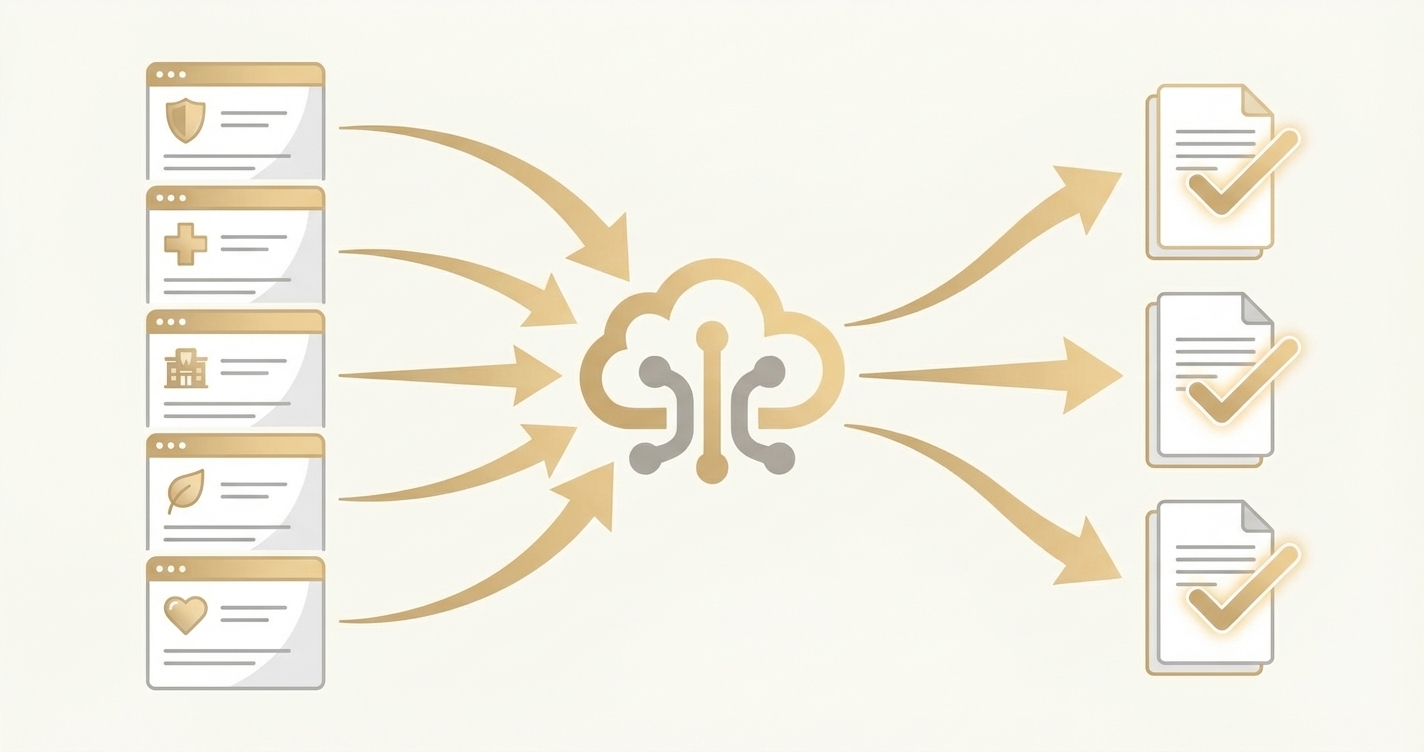
Enterprise AR follow-up automation is the use of AI-powered agents to systematically work aged accounts receivable across multiple facilities, payer portals, and claim categories—replacing the manual, phone-heavy workflows that consume thousands of FTE hours each month. Instead of billing coordinators toggling between payer websites, placing hold-queue phone calls, and manually updating practice management systems, intelligent agents execute claim status checks, identify denial root causes, and trigger corrective actions at machine speed.
For health systems and RCM companies managing 100K+ claims per month, the impact is transformational. Organizations deploying Ventus AI agents have seen AR days drop by 15–25 days, with millions in previously written-off revenue recovered within the first quarter. In the healthcare RCM space more broadly, Smilist—a DSO scaling to 100+ locations—executes over 3,000 claim status checks daily using AI agents, replacing work that would require 5–8 full-time coordinators. That same enterprise-scale logic applies directly to medical RCM, where the volume and complexity of aged claims is exponentially greater.
This guide is written for health system CFOs, VP Revenue Cycle leaders, and RCM company executives who need to move beyond incremental process improvement. In 2026, with payer reimbursement timelines lengthening and staffing costs rising, the organizations that automate AR follow-up at scale will capture a structural margin advantage over those still relying on manual workflows.
Here's what we'll cover: the hidden cost of aged AR across multi-facility organizations, a head-to-head comparison of the three dominant approaches to AR follow-up, an enterprise implementation roadmap, realistic ROI benchmarks, and answers to the questions health system leaders are asking right now.
The Hidden Cost of Aged AR Across a Multi-Facility Health System
Aged accounts receivable is not just a billing problem—it's a balance sheet problem. According to the Healthcare Financial Management Association (HFMA), the average health system carries between 45 and 55 days in AR, and every day beyond optimal benchmarks represents real cash locked in limbo. For a system processing $500M in annual net patient revenue, each additional AR day costs roughly $1.37M in delayed cash flow.
But the visible metric—days in AR—understates the true operational cost. Here's where multi-facility organizations bleed margin:
- FTE saturation: A single AR follow-up specialist can work 40–60 claims per day when calls, hold times, payer portal navigation, and documentation are factored in. At 100K claims/month with a 15% aged AR rate, that's 15,000 claims requiring follow-up—approximately 250–375 FTE-days of labor per month.
- Inconsistent workflows across sites: After M&A activity, acquired facilities often run different PMS/EHR systems, use different payer portals, and follow different escalation protocols. Standardizing AR follow-up manually after acquiring even 3–5 new facilities can take 6–12 months.
- Write-off acceleration: Claims that age beyond 90 days see recovery rates plummet. MGMA data shows that claims worked within 30 days of initial denial have a 65%+ recovery rate; by day 120, that drops below 20%. Every week of delay is revenue permanently lost.
- Staff turnover compounding losses: The Medical Group Management Association reports billing staff turnover exceeding 30% annually at many large organizations. Each new hire takes 60–90 days to reach full productivity, creating recurring coverage gaps in AR follow-up queues.
- Valuation impact: For RCM companies and health systems evaluating strategic transactions, elevated AR days and high write-off rates directly suppress EBITDA multiples. Private equity buyers routinely discount valuations by 0.5–1.0x for organizations with AR days above 50.
The core challenge is scale. Manual AR follow-up doesn't degrade linearly—it degrades exponentially as volume increases, because coordination costs, quality variance, and management overhead all compound. This is precisely why enterprise organizations are shifting from staff augmentation to medical RCM automation powered by AI agents.
Health systems using AI agents cut claim denial rates by 30% in 90 days.
Request an Enterprise AssessmentThree Models for Enterprise AR Follow-Up: A Head-to-Head Comparison
Health system and RCM executives typically evaluate three approaches to scaling AR follow-up. Each has distinct trade-offs in cost, speed, and control.
1. In-House Manual Teams
Best for: Organizations with low claim volume and stable payer mixes that don't require rapid scaling.
- Pros: Direct management oversight; institutional knowledge retained internally; full control over prioritization
- Cons: High fully loaded cost per FTE ($55K–$75K including benefits, training, management); severe scaling constraints during M&A integration; 30%+ annual turnover creating persistent coverage gaps; inconsistent quality across shifts and sites
2. Outsourced / Offshore BPO
Best for: Organizations seeking cost reduction on routine, high-volume tasks with tolerance for less direct oversight.
- Pros: Lower per-FTE cost ($18K–$30K offshore); ability to scale headcount faster than domestic hiring; vendor absorbs turnover management
- Cons: Quality control challenges at scale; communication latency across time zones; limited ability to handle complex payer exceptions; HIPAA compliance risk with offshore data handling; loss of institutional knowledge; typical 60–90 day ramp for new cohorts
3. AI Agent Automation (Ventus Approach)
Best for: Health systems and RCM companies processing 100K+ claims/month that need consistent, auditable, 24/7 AR follow-up across multiple payer portals and PMS platforms.
- Pros: Sub-7-day deployment; 24/7 operation without shift coverage gaps; consistent execution across all facilities; full audit trails and SOC 2 and HIPAA compliance; scales linearly without incremental management overhead; browser-native automation requiring no API integrations
- Cons: Requires executive sponsorship for change management; best suited for high-volume, repetitive AR tasks (complex clinical appeals still benefit from human reviewers)
| Capability | In-House Manual | Outsourced BPO | Ventus AI Agents |
|---|---|---|---|
| Claims worked per day (per unit) | 40–60 | 50–70 | 2,000–5,000+ |
| Deployment time | 60–90 days (hiring + training) | 30–60 days | Under 7 days |
| Cost per claim follow-up | $4.50–$7.00 | $2.50–$4.00 | $0.50–$1.50 |
| 24/7 coverage | No (shift-dependent) | Partial (time zone gaps) | Yes |
| Audit trail completeness | Inconsistent | Vendor-dependent | 100% automated logging |
| HIPAA/SOC 2 compliance | Internal responsibility | Varies by vendor | SOC 2 Type II + BAA-ready |
| Multi-PMS support | Requires cross-training | Requires vendor training | Browser-native (any portal) |
| Scales with M&A integration | Slowly (months) | Moderately (weeks) | Rapidly (days) |
The comparison is particularly stark at enterprise scale. When you're integrating newly acquired facilities or onboarding new RCM clients, the ability to deploy AI agents in under a week—without waiting for API integrations or portal credentials beyond standard user access—eliminates the months-long ramp that manual and BPO models require.
Enterprise Implementation Roadmap: From Pilot Facility to System-Wide Deployment
Deploying AR follow-up automation across a multi-facility health system requires a structured rollout. Based on patterns across enterprise healthcare deployments, here's the roadmap that minimizes risk and accelerates time-to-value.
Phase 1: Pilot Scope Definition (Week 1)
- Select a single facility or payer segment with the highest aged AR concentration (e.g., claims 60–120 days for your top 3 commercial payers)
- Baseline current metrics: AR days, recovery rate by aging bucket, FTE hours per claim, cost per claim worked
- Identify portal access requirements: Ventus AI agents operate via browser-native automation, so they use the same payer portal credentials your team uses—no API buildouts or IT integration projects
- Establish communication channels: Agents report via Slack, Teams, or email, surfacing exceptions for human review
Phase 2: Agent Configuration and Go-Live (Week 1–2)
- Workflow mapping: Define the claim status check → denial identification → corrective action → re-submission logic for each payer
- MFA and security flows: Ventus agents handle multi-factor authentication and CAPTCHA challenges natively, so your existing portal security posture remains intact
- Go-live with daily reporting: Agents begin executing claim status checks and AR follow-up, with real-time dashboards showing claims worked, statuses returned, and exceptions flagged
Phase 3: Validation and Optimization (Weeks 2–4)
- Compare agent output against baseline: Track recovery rates, AR day movement, and exception rates
- Tune prioritization logic: Shift agent focus toward highest-value aging buckets based on initial results
- Train internal teams on exception handling: Agents escalate complex cases (clinical appeals, coordination of benefits disputes) to human reviewers with full context attached
Phase 4: System-Wide Rollout (Weeks 4–8)
- Expand to additional facilities, payer segments, and claim types
- Standardize workflows across acquired or integrated sites—a critical advantage for health systems mid-M&A
- Integrate with existing systems and workflows for seamless data flow
Common Pitfalls to Avoid
- Boiling the ocean: Don't try to automate every AR workflow simultaneously. Start with high-volume, rules-based tasks (claim status checks, simple denial resubmissions) where AI agents deliver immediate ROI.
- Skipping baselining: Without clear pre-deployment metrics, you can't quantify improvement or justify broader rollout to your board.
- Ignoring change management: AR coordinators need to understand that AI agents handle the repetitive portal work so they can focus on complex cases and strategic payer negotiations.
Enterprise Success Factors
- Executive sponsorship: VP Revenue Cycle or CFO must champion the initiative and hold teams accountable for adoption
- Defined escalation protocols: Clear rules for when agents hand off to humans, with SLAs for human response times
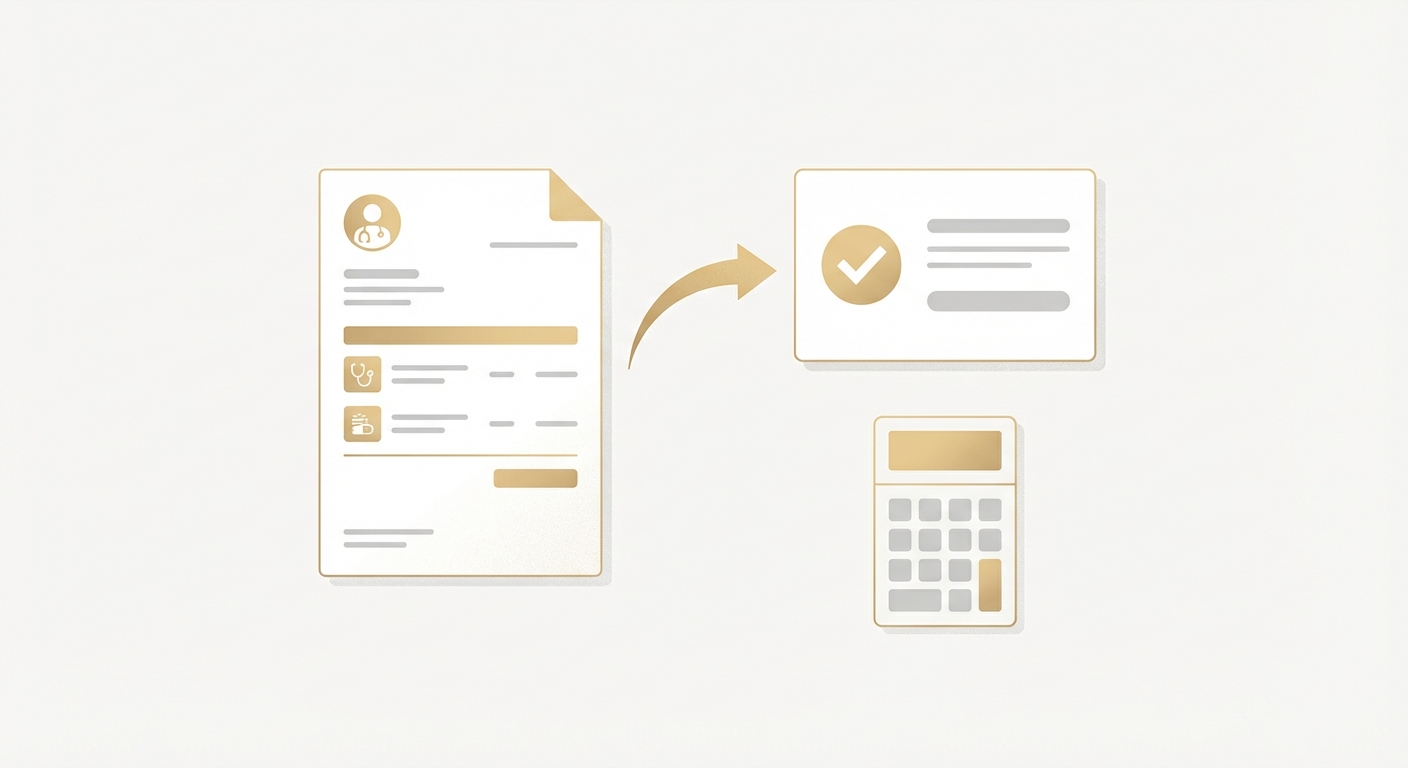
- Continuous monitoring: Use the ROI calculator to track ongoing performance against targets
The healthcare RCM results at enterprise scale speak clearly. Consider the pattern established by Smilist, a DSO scaling to over 100 locations that deployed AI agents for claim status automation:
"Ventus stands out from the noise in the AI and automation market. Their approach allows them to ramp up quickly in the messy middle of RCM."
— Philip Toh, Co-founder & President, Smilist
Smilist's agents now execute over 3,000 claim status checks daily—work that would require 5–8 full-time coordinators. For medical RCM organizations operating at even greater scale, the leverage is proportionally larger. A health system processing 150K claims per month can expect AI agents to handle the equivalent of 15–25 FTEs of AR follow-up work, with consistent quality and complete audit trails. Explore more results in our customer stories.
ROI Reality Check: What Health System CFOs and RCM Executives Actually Achieve
Enterprise AR automation delivers measurable returns across four dimensions. Here's what the data shows for organizations at scale:
Revenue Recovery
- Aged AR recovery (60–120 day bucket): Organizations typically recover 25–40% of previously stalled claims within the first 90 days of deployment, translating to $1.5M–$4M+ for a mid-size health system
- Write-off reduction: By working claims faster and more consistently, write-off rates on aged AR drop by 30–50%
- Net collection rate improvement: 1.5–3 percentage point improvement in net collection rate, which on $200M+ in net patient revenue represents $3M–$6M annually
Cost Reduction
- FTE reallocation: 60–75% reduction in manual AR follow-up FTE hours, enabling redeployment to complex appeals, patient financial counseling, and strategic payer negotiations
- Cost per claim worked: Drops from $4.50–$7.00 (manual) to $0.50–$1.50 (AI agent-driven), a 70–85% reduction
- Overtime and temp staffing elimination: AI agents operate 24/7 without shift premiums, PTO, or coverage gaps
Operational Speed
- Quick wins (Week 1–2): Pilot facility processes 1,000–3,000+ claims per day through automated status checks; immediate visibility into denial patterns
- Medium-term (Month 1–2): AR days decrease by 8–15 days at pilot site; denial root cause data informs upstream process fixes
- Full deployment (Month 2–3): System-wide AR days reduction of 15–25 days; standardized workflows across all facilities
Strategic Value
- M&A integration acceleration: New facility AR workflows standardized in days, not months
- Client retention (for RCM companies): Demonstrable performance improvement strengthens client relationships and supports premium pricing
- EBITDA improvement: Combined revenue recovery and cost reduction can add 2–5 points to operating margin
To quantify the specific impact for your organization, use the enterprise ROI calculator with your actual claim volumes and payer mix data. For a deeper dive into how medical claim denial management with AI drives upstream improvements, that guide covers denial prevention strategies that complement AR follow-up automation.
See how health systems use AI agents for prior auth, eligibility, and claims at 100K+ claims/month.
Request a Demo and Free RCM AuditFrequently Asked Questions
How does enterprise AR follow-up automation actually work?
AI agents log into payer portals through browser-native automation—the same way your staff does—and execute claim status checks, identify denial reasons, and trigger corrective workflows automatically. They handle MFA, CAPTCHAs, and security flows natively. Exceptions that require clinical judgment or complex appeals are escalated to human reviewers via Slack, Teams, or email with full context attached. No API integrations are required, which means deployment doesn't depend on payer or PMS vendor cooperation.
How much does healthcare AR automation cost compared to manual follow-up?
AI agent-driven AR follow-up typically costs $0.50–$1.50 per claim worked, compared to $4.50–$7.00 for in-house manual teams and $2.50–$4.00 for outsourced BPO. For a health system working 15,000 aged claims per month, that translates to annual savings of $500K–$1M+ in direct labor costs alone—before counting recovered revenue. Explore projected savings for your specific volumes with the ROI calculator.
How long does implementation take for a multi-facility health system?
Under 7 days for an initial pilot facility. Ventus AI agents are configured using your existing payer portal credentials and workflow logic—no IT integration projects, no months-long buildouts. A focused pilot goes live in the first week with daily reporting via Slack or Teams. System-wide rollout across multiple facilities typically completes within 4–8 weeks depending on the number of payer segments and PMS platforms involved.
Is AI-powered AR follow-up HIPAA compliant and SOC 2 certified?
Yes. Ventus AI is HIPAA compliant and SOC 2 Type II certified, with BAA execution available for all enterprise clients. All agent actions are logged with complete audit trails, and the platform supports role-based access controls and SSO compatibility. Review full enterprise security and compliance details including data handling protocols and encryption standards.
What results can we realistically expect in the first 90 days?
Most enterprise organizations see AR days decrease by 8–15 days at pilot sites within the first month, with 25–40% recovery of previously stalled claims in the 60–120 day aging bucket. At full deployment, health systems report 15–25 day AR reductions system-wide and $1.5M–$4M+ in recovered revenue. As a benchmark, Smilist executes 3,000+ daily claim status checks with AI agents, replacing 5–8 full-time coordinator positions across their dental RCM automation operations.
Can AI agents handle multiple PMS and EHR platforms across acquired facilities?
Yes—this is one of the strongest advantages of browser-native automation. Because agents interact with payer portals and practice management systems through the browser interface (not through APIs), they work across any web-accessible platform your facilities use. This eliminates the standardization bottleneck that typically delays AR follow-up improvements by months after M&A transactions.
How does this differ from traditional RPA or consumer AI tools like ChatGPT?
Traditional RPA (robotic process automation) breaks when portal interfaces change and cannot handle MFA or CAPTCHAs without manual intervention. Consumer AI tools like ChatGPT lack HIPAA compliance, audit trails, and the ability to interact with secured payer portals. Ventus AI agents are purpose-built for healthcare RCM—they navigate real payer workflows, maintain enterprise security standards, and communicate exceptions through your existing channels. For a detailed technical comparison, see our guide on RPA vs AI agents.
What claims are best suited for AI agent automation versus human follow-up?
High-volume, rules-based AR tasks are ideal for AI agents: claim status checks, simple denial resubmissions, eligibility re-verification, and timely filing appeals. Complex clinical appeals, coordination of benefits disputes requiring clinical documentation, and payer contract negotiation remain best handled by experienced human reviewers. The AI-plus-human model frees your most skilled staff to focus on the highest-value work while agents handle the volume. Learn more about complementary workflows in our eligibility verification automation guide.
Your Next Move: A 90-Day Action Plan for Enterprise AR Recovery
Aged AR is not an inevitable cost of doing business at scale—it's an operational bottleneck that modern AI agents eliminate. The organizations recovering millions in 2026 are the ones that stopped treating AR follow-up as a staffing problem and started treating it as an automation opportunity.
Here's your 90-day action plan:
- Week 1 — Baseline and scope: Pull your AR aging report segmented by facility, payer, and aging bucket. Identify the single facility or payer segment with the highest concentration of claims in the 60–120 day range. Calculate your current cost per claim worked and FTE hours consumed.
- Week 2 — Pilot deployment: Launch AI agents on your highest-impact AR segment. Ventus agents go live in under 7 days with no API integrations required. Establish daily reporting cadence via Slack, Teams, or email.
- Weeks 3–4 — Measure and optimize: Compare agent output against your baseline. Track claims worked per day, recovery rates by aging bucket, and exception rates. Tune prioritization logic based on results.
- Month 2 — Expand: Roll out to additional facilities and payer segments. Begin quantifying FTE reallocation opportunities and present initial ROI data to your executive team.
- Month 3 — Standardize system-wide: Deploy across all facilities with standardized workflows. Integrate automated claim narrative generation for denial appeals. Present full ROI analysis including revenue recovered, cost reduction, and AR days improvement.
The math is straightforward: every day you delay automating AR follow-up, aged claims move closer to write-off thresholds. Every month your team spends on manual portal navigation is a month they're not spending on complex appeals, payer strategy, and revenue optimization.
Explore more medical RCM guides to build your full automation strategy—or take the most direct next step:
→ See how it works on your payer mix — Book a 30-minute demo
Ready to Transform Your Healthcare revenue cycle?
See how Ventus AI agents can automate your prior auth, eligibility, and claims automation at scale in under 7 days—no complex integrations required.
Book Your Free Demo
Enterprise AI Automation for Healthcare RCM
Written by the Ventus AI team — healthcare RCM practitioners, automation engineers, and former revenue cycle leaders building AI agents that work as teammates alongside billing teams. Ventus is SOC 2 Type II certified and HIPAA compliant.