
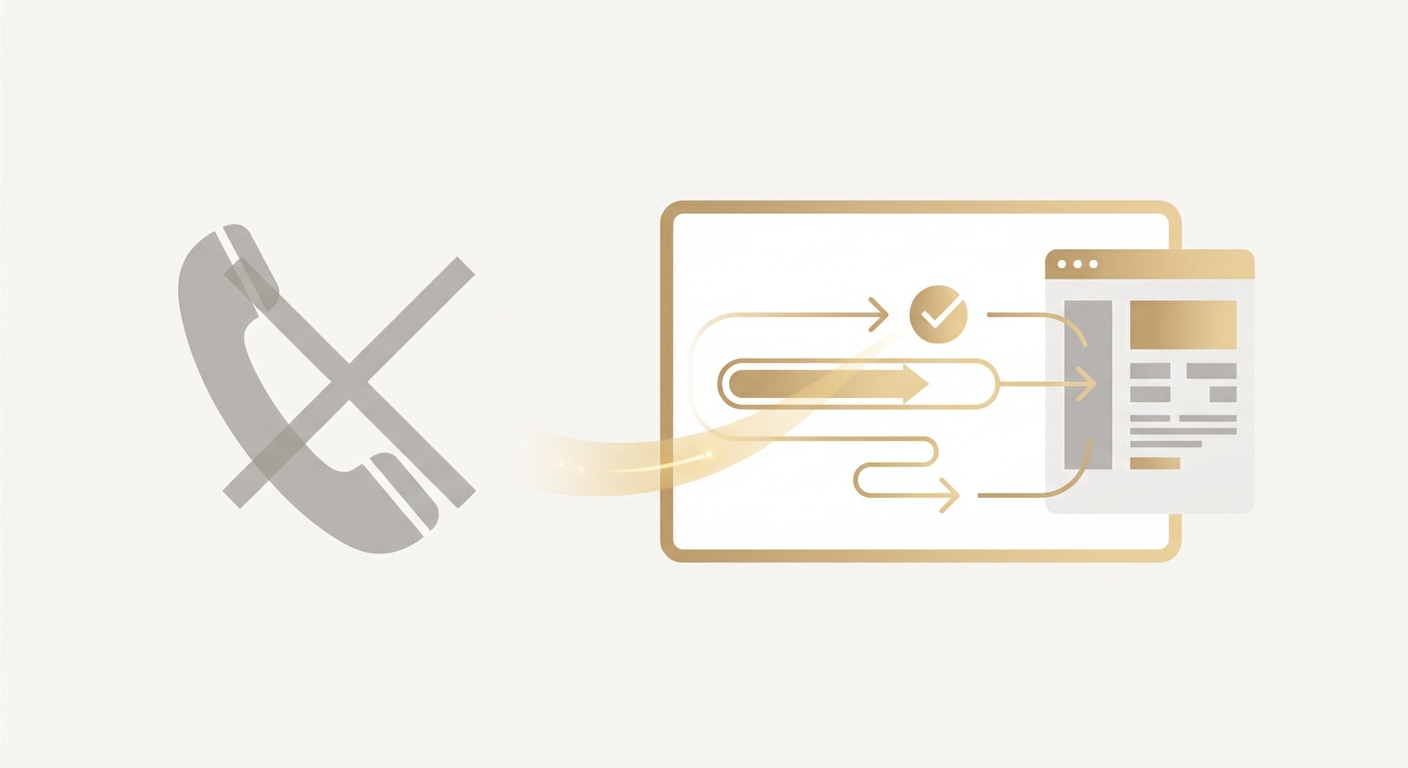
"No Claim on File" costs hours on hold with payers every day. AI-powered claim statusing checks 3,000+ dental claims daily across portals automatically.
"No Claim on File"? Stop Wasting Hours on Phone Calls—Use Automated Claim Statusing
You submitted the claim. You have the confirmation number. The patient was seen weeks ago. And yet, when you call the insurance company, you hear those four infuriating words: "No Claim on File."
For dental billing teams, this response is more than an inconvenience—it's a productivity black hole. Every "No Claim on File" triggers a cascade of manual work: phone calls, hold times, faxes, resubmissions, and documentation. Multiply that by dozens of claims per week, and you've got a full-time job that produces zero revenue.
There's a better way. Automated Claim Statusing technology can check hundreds of claims in minutes, identify which ones truly have no record, and flag them for immediate action—all without a single phone call.
What is Automated Claim Statusing?
Automated Claim Statusing is a process that leverages AI technology to automatically check the status of insurance claims across multiple payer portals. This system can scan through hundreds of claims within minutes, identifying those that have not been recorded or require further action. The primary benefit of this approach is the significant reduction in time spent manually tracking claims. For example, Smilist was able to reduce its Accounts Receivable (AR) follow-up time from 90 days to under 24 hours using Ventus AI, a leading platform in this space. This rapid identification and resolution process not only accelerate cash flow but also enhance the efficiency of dental billing teams by reallocating their efforts from redundant administrative tasks to more strategic initiatives.
What Does "No Claim on File" Actually Mean?
Let's be direct: "No Claim on File" often doesn't mean what the payer wants you to think it means.
When an insurance representative tells you there's no claim on file, it could indicate any of the following:
| What They Say | What It Often Means |
|---|---|
| "We have no record of this claim" | The claim was received but hasn't been entered into their system yet |
| "No claim on file for this patient" | The subscriber ID or patient info was entered incorrectly on their end |
| "We never received it" | The claim is sitting in a processing queue, unacknowledged |
| "You'll need to resubmit" | They're buying time or hoping you'll give up |
The reality is that payers benefit from ambiguity. Every day a claim sits unresolved is another day they hold onto that money. "No Claim on File" is sometimes a legitimate data issue—but it's also frequently a stalling tactic.
For practices operating under tight margins, you can't afford to play this game manually.
The Old Way: The Pain of Manual Claim Status Calls
Here's what the traditional workflow looks like when you encounter "No Claim on File":
- Identify the problem – You notice a claim hasn't been paid after 30+ days.
- Call the payer – Average hold time: 15-45 minutes.
- Verify information – Provide patient name, DOB, subscriber ID, date of service, procedure codes.
- Hear "No Claim on File" – The representative can't find it.
- Request investigation – They promise to "look into it" and call back (they won't).
- Resubmit the claim – Just to be safe, you send it again.
- Document everything – Notes in the PMS, call logs, confirmation numbers.
- Repeat in 2 weeks – Because nothing has changed.
The math is brutal:
- Average time per "No Claim on File" resolution: 45-90 minutes
- Average cost per manual status check: $8-$15 in labor
- Percentage of claims that require status follow-up: 20-30%
If your practice submits 500 claims per month and 25% need status checks, that's 125 claims × 45 minutes = 94 hours per month spent on the phone. That's more than two full-time work weeks—just checking on claims.
The New Way: Automated Claim Statusing and Dental Claim Triage
Automated Claim Statusing fundamentally changes this equation. Instead of calling payers one by one, AI-powered systems can perform a bulk claim status checking Check across all your outstanding claims simultaneously.
Here's how it works with Ventus AI:
1. Bulk Claim Status Check
Every night (or on-demand), AI agents log into payer portals and check the status of every outstanding claim. No phone calls. No hold music. No human time wasted.
2. Instant Identification of "No Claim on File"
The system flags any claim where the payer portal shows no record. But here's the key difference: you find out in minutes, not weeks. Early detection means faster resubmission and faster payment.
3. Dental Claim Triage
Not all missing claims are equal. Dental Claim Triage automatically prioritizes which claims to address first based on:
- Dollar amount at risk
- Days since submission
- Payer history (some payers "lose" claims more often)
- Timely filing deadline proximity
4. Automated Resubmission
For claims confirmed as missing, the system can automatically resubmit with updated timestamps and documentation—no manual intervention required.
case studies: How Bulk Claim Status Check Found $47,000 in Missing Claims
A 12-location DSO was experiencing chronic cash flow issues. Their aging report showed a growing 60+ day bucket, but their billing team insisted they were "on top of it."
When they implemented Automated Claim Statusing, the first Bulk Claim Status Check revealed the problem:
- 127 claims showed "No Claim on File" status at the payer
- $47,000 in total value was sitting in limbo
- 23 claims were within 30 days of timely filing deadlines
The root cause? A clearinghouse configuration error had been silently dropping claims for one specific payer. The billing team had no idea because they were checking claims reactively, not proactively.
Within 48 hours of discovery, all 127 claims were resubmitted. Within 30 days, $41,000 was collected—revenue that would have been written off under the old manual process.
DSOs with 50+ locations save 40% on RCM costs in the first 90 days.
Request an Enterprise AssessmentHow Automated Claim Statusing Reduces Your Revenue Cycle Management Workload
Implementing Automated Claim Statusing doesn't just solve the "No Claim on File" problem—it transforms your entire Dental RCM operation:
| Manual Process | With Ventus Automation |
|---|---|
| Check claims one at a time | Bulk Claim Status Check on entire A/R |
| React to problems after 30-60 days | Identify issues within 24-48 hours |
| Staff time spent on hold | Zero phone calls for routine status checks |
| Inconsistent follow-up | 100% of claims checked, 100% of the time |
| High-value claims get lost in volume | Dental Claim Triage prioritizes automatically |
The result? Your billing team stops doing robotic work and starts doing strategic work. They handle the complex appeals, the unusual denials, the cases that actually require human judgment. Everything else runs on autopilot.
Frequently Asked Questions
How does Automated Claim Statusing work?
Automated Claim Statusing uses AI technology to perform Bulk Claim Status Checks across payer portals. It identifies claims that have no record, flags them, and can even resubmit them automatically. This process eliminates the need for manual phone calls and follow-ups, significantly reducing the time and effort required for claim management.
What is the cost/ROI of implementing Automated Claim Statusing?
The cost of implementing Automated Claim Statusing varies depending on the size of your practice and the specific platform used. However, the ROI is typically substantial. Practices like Smilist have seen their AR follow-up time drop from 90 days to under 24 hours, resulting in faster cash flow and reduced labor costs associated with manual processes.
How long does it take to implement Automated Claim Statusing?
Implementation timelines can vary, but most platforms can be set up within a few weeks. The process generally involves configuring the AI agents with your practice's credentials and integrating them with your Practice Management System for seamless operation.
Is Automated Claim Statusing compliant with HIPAA regulations?
Yes, when implemented correctly. Platforms like Ventus AI are SOC 2 and HIPAA compliance Type II and HIPAA compliant, ensuring that all claim status checks are performed with the necessary security controls, audit logging, and data protection measures.
What results can I expect from using Automated Claim Statusing?
Using Automated Claim Statusing, you can expect faster claim resolution, reduced manual labor, and improved cash flow. Practices have reported significant reductions in AR follow-up times and increased revenue recovery from claims that would have otherwise been written off.
What are the edge cases for Automated Claim Statusing?
While Automated Claim Statusing covers most scenarios, edge cases can include claims with exceptionally complex billing codes or payer-specific requirements that need manual intervention. However, these are rare and typically represent a small percentage of overall claims.
How does Automated Claim Statusing compare to traditional methods?
Compared to traditional methods, Automated Claim Statusing offers faster processing, reduced human error, and a more streamlined workflow. Manual methods rely heavily on staff time and are prone to delays and inconsistencies, whereas automation ensures timely and accurate claim management.
What are the best practices for using Automated Claim Statusing?
Best practices include regularly updating payer portal credentials for uninterrupted access, monitoring flagged claims daily for timely action, and integrating the system with your PMS for seamless data flow. Additionally, periodic reviews of system performance can help in optimizing ROI and efficiency.
Common Mistakes to Avoid
When implementing Automated Claim Statusing, avoid relying solely on automation without periodic human oversight. Regular audits of the system's performance can identify discrepancies or areas for improvement. Ensure all staff are adequately trained to understand the system's alerts and processes.
Best Practices
To maximize the benefits of Automated Claim Statusing, maintain up-to-date payer information and credentials. Regularly review flagged claims for patterns that might indicate broader issues, such as payer-specific errors. Integrating the system with your practice management software ensures seamless data exchange and enhances overall efficiency.
Expected Timeline for Implementation
Implementing Automated Claim Statusing can be broken down into a week-by-week process:
- Week 1: Initial consultation and needs assessment.
- Week 2: Configuration of AI agents and integration with current systems.
- Week 3: Testing phase to ensure accuracy and reliability.
- Week 4: Full implementation and staff training.
Stop Playing the Payer's Game
"No Claim on File" is a symptom of a broken system—one where payers hold all the cards and dental practices waste countless hours chasing information that should be instantly available.
Automated Claim Statusing levels the playing field. Instead of reacting to problems weeks after they occur, you proactively monitor every claim, every day. Instead of spending hours on hold, you get answers in minutes. Instead of writing off claims that "fell through the cracks," you catch them before they're lost.
The practices that thrive aren't the ones with the biggest billing teams. They're the ones that refuse to waste human time on work that machines can do better.
See why scaling DSOs trust Ventus AI to automate claim statusing, denials, and AR follow-up.
Request a Demo and Free RCM AuditReady to Transform Your Dental RCM?
See how Ventus AI agents can automate your claim denial management and AR follow-up across all your locations in under 7 days—no complex integrations required.
Book Your Free Demo
Enterprise AI Automation for Healthcare RCM
Written by the Ventus AI team — healthcare RCM practitioners, automation engineers, and former revenue cycle leaders building AI agents that work as teammates alongside billing teams. Ventus is SOC 2 Type II certified and HIPAA compliant.