Is OpenAI Operator healthcare-ready for HIPAA workloads? Learn gaps, SOC 2/BAA needs, and how Ventus AI deploys in under 7 days with audit trails. Today.
What is OpenAI Operator in Healthcare?
OpenAI Operator in healthcare refers to using OpenAI’s new agentic framework ("Operator") to perform multi-step, goal-directed tasks like navigating payer portals, reconciling EOBs, drafting clinical appeals, or coordinating prior authorizations while interacting with enterprise systems. In theory, Operator can orchestrate tools, browse, and execute workflows—offloading manual work for teams spanning 50–500+ locations and millions of transactions.
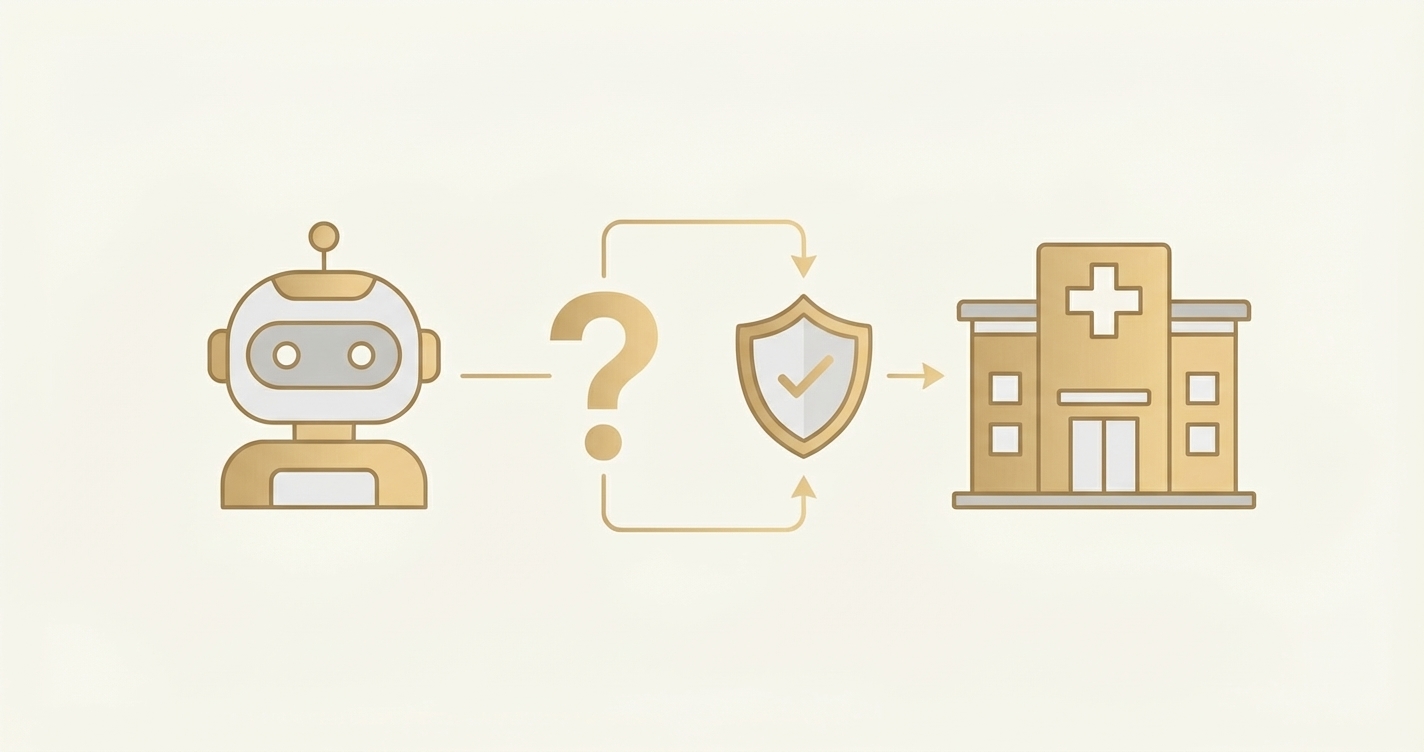
At enterprise scale, the promise is attractive: fewer handoffs, faster cycle times, and standardization across acquisitions. For example, a multi-location DSO working with the enterprise-grade Ventus AI platform executes over 3,000 claim status checks daily—work that would otherwise require 5–8 full-time coordinators—proving that agentic AI can operate reliably in the messy middle of RCM at volume. The question for 2026 isn’t whether agentic AI works; it’s whether an Operator-style approach is HIPAA-ready with audit trails, role-based access, and production-grade reliability for healthcare.
This guide breaks down what Operator is, where it shines, and where healthcare enterprises will likely demand more. We compare three deployment models (build with Operator, assemble a secure stack, or deploy enterprise agents), outline a blueprint to pilot and scale, quantify ROI, and answer FAQs on HIPAA, SOC 2, MFA/CAPTCHA handling, and timeline.
The Hidden Cost of Prototype-Grade Agents Across a Growing Organization
Agentic AI can wow in demos. But at enterprise scale—multi-facility health systems, DSOs with 100+ locations, and RCM companies processing 100K+ claims per month—the economics are governed by compliance, standardization, and durable throughput.
- Compliance drag without a BAA: If an agent framework doesn’t offer HIPAA-eligible hosting and a Business Associate Agreement, it cannot touch PHI in production. That pushes teams to limit scope to de-identified data or non-PHI tasks, undercutting ROI.
- Audit and forensics gaps: Executives need immutable logs of every action, field, and timestamp for internal audit, payer disputes, and SOC 2 controls. Without granular replay, you absorb governance risk and rework when questions arise.
- Identity, SSO, and least privilege: Enterprise deployment demands SSO, per-seat permissions, secrets management, and separation of duties—especially when agents access payer portals, EMRs, or clearinghouses. A missing or partial identity model turns pilots into shadow IT.
- Browser-native realities: Much of RCM lives behind web portals guarded by MFA, CAPTCHAs, timeouts, and brittle UX. Agents must navigate those flows reliably, not just via APIs that don’t exist or are throttled.
- Phone work for exceptions: High-value edge cases (e.g., payer callbacks to resolve a denial) still require phone calls. Automation that cannot place and handle calls stalls at 80% automation, leaving humans to chase the hardest 20%.
- M&A standardization at scale: After acquiring 10–30 sites, many organizations spend months harmonizing workflows and payer lists. Agents must encapsulate enterprise standards and roll out uniformly—otherwise, each site re-invents the process and your cost-per-claim creeps up.
In short, the gulf between a compelling Operator demo and a hardened healthcare deployment is filled with HIPAA requirements, auditability, identity, and real-world integrations. That’s why CIOs and CFOs push for enterprise-grade controls and predictable, unit-based ROI rather than experimental prototypes.
Enterprise teams deploy in 7 days — no integration required.
Book Your Free 15-Minute DemoThree Models for Agentic AI in Healthcare: A Head-to-Head Comparison
Healthcare leaders typically evaluate three approaches to bring agentic AI into RCM, eligibility, and prior auth workflows. Each can work—if matched to the right risk profile and operating constraints.
1. Build on OpenAI Operator
- Best for: Innovation teams validating narrow, low-risk workflows without PHI or under a carefully controlled data boundary.
- Pros:
- Fast prototyping: Rapid iteration for task decomposition and tool use.
- Extensible: Plugin/tool ecosystem potential to call external services.
- Strong reasoning models: Emerging planning capabilities for complex tasks.
- Cons:
- HIPAA uncertainty: No public, turnkey BAA for Operator; PHI may be off-limits unless routed via a HIPAA-eligible stack.
- Enterprise controls vary: Gaps around role-based access, SSO breadth, and immutable audit trails.
- Operational reliability: Handling MFA/CAPTCHAs, timeouts, and long-running jobs requires additional orchestration.
2. Assemble a Secure Stack (e.g., Azure OpenAI + orchestration + RPA)
- Best for: Large IT teams willing to own integration, compliance, and runtime reliability across multiple vendors.
- Pros:
- HIPAA eligibility: Azure OpenAI and similar platforms can be covered under a BAA.
- Control plane: You control data residency, encryption, and observability.
- Composable: Mix LLMs, RPA, call APIs, and custom services.
- Cons:
- Integration tax: Months of engineering to harden MFA/CAPTCHAs, retries, and monitoring.
- Vendor sprawl: Tooling across logging, identity, telephony, and browsers increases operational burden.
- Change management: Maintaining scripts/robots across payer UX changes is non-trivial.
3. Deploy Browser-Native Ventus AI Agents
- Best for: Healthcare enterprises seeking HIPAA-compliant, SOC 2 Type II, audit-ready agents that handle payer portals, MFA, CAPTCHAs, exceptions, and even phone calls.
- Pros:
- HIPAA and SOC 2 Type II: BAA-ready with role-based access, SSO compatibility, and full audit trails.
- Browser-native automation: Handles payer portals without APIs; resilient to UX changes.
- Operations-grade: Can place phone calls for edge cases; communicates via Slack, Teams, and Email.
- Speed to value: Typical deployments under 7 days.
- Cons:
- Guarded scope: Purpose-built for enterprise-grade workflows rather than broad consumer experimentation.
- Governed rollout: Requires intake and prioritization (a pro for many executives, a con for ad hoc tinkering).
Manual vs Operator vs Ventus: What Changes in Production
| Capability | Manual Operations | OpenAI Operator (prototype) | Ventus AI Agents |
|---|---|---|---|
| HIPAA/BAA coverage | Human adherence; costly oversight | Unclear without HIPAA-eligible hosting/BAA | HIPAA-compliant, SOC 2 Type II, BAA-ready |
| Deployment time | Hiring/training: months | Prototype in days; prod hardening uncertain | Under 7 days to pilot, governed scale |
| PHI handling | Staff training + DLP | Risk without BAA; PHI often excluded | PHI-safe workflows with audit trails |
| Audit trail & replay | Manual notes; error-prone | Limited/varies by build | Immutable logs, step-by-step replay |
| MFA/CAPTCHA handling | Staff clicks | Requires extra tooling/ops | Native handling of MFA/CAPTCHAs |
| Phone calls for exceptions | Yes, staff time | Not native; add telephony stack | Built-in phone capabilities for resolution |
| Payer portal coverage | 100% human-driven | Requires browser automation add-ons | Browser-native, resilient to UI change |
| Enterprise RBAC/SSO | HR + IT-managed | Varies; add identity provider work | Role-based access, SSO-compatible |
| Cost-per-claim | High, scales linearly | Uncertain; infra + eng costs | Predictable, declines with volume |
| Outcome example | 5–8 FTEs for 3K daily checks | Demo-level automation | 3,000+ daily checks at a DSO (Smilist) |
Enterprise Implementation Roadmap: From Pilot Site to Full Deployment
A successful rollout aligns governance with measurable throughput. Here’s a pragmatic 6-step plan healthcare CIOs and revenue cycle leaders can execute in 90 days.
- Confirm data boundaries and BAA
- Action: Determine whether your pilot will include PHI; if yes, ensure HIPAA-eligible infrastructure and a BAA are in place from day one.
- Why it matters: Avoid rework by designing guardrails (masking, minimization, logging) up front.
- Select low-friction, high-yield workflows
- Action: Start with claim statusing, eligibility checks, or routing tasks across 1–2 payers and 1–2 locations.
- Why it matters: These tasks are repeatable, high-volume, and measurable—ideal for demonstrating cost-per-claim reduction.
- Design the agent and guardrails
- Action: Define triggers (files, queues, time-based), escalation rules, exception pathways (including phone outreach), and communication channels (Slack/Teams/Email).
- Why it matters: Clear governance prevents silent failures and ensures work moves forward when portals change or calls are needed.
- Harden the runtime
- Action: Validate browser flows (MFA, CAPTCHAs, timeouts), credentials rotation, and audit logs. Confirm role-based access and SSO.
- Why it matters: This is where many prototypes stall. Agents must be resilient to web UX, identity, and network variability.
- Run a 2-week pilot with executive KPIs
- Action: Track average handle time, completion rate, exception rate, and cost-per-claim versus baseline. Publish daily updates to a shared Slack/Teams channel.
- Why it matters: Transparency builds confidence and aligns stakeholders around go/no-go criteria.
- Scale site-by-site and payer-by-payer
- Action: Expand to 5–10 additional locations, then system-wide. Standardize templates and embed change management into onboarding.
- Why it matters: Enterprise ROI appears when you eliminate variance and drive uniform adoption.
"Ventus stands out from the noise in the AI and automation market. Their approach allows them to ramp up quickly in the messy middle of RCM."
— Philip Toh, Co-founder & President, Smilist
Real-world proof matters. Smilist—a DSO scaling toward 100+ locations—uses enterprise agents to execute 3,000+ claim status checks per day, transforming a high-variance process into a predictable, audited workflow. If you’re exploring prior auth or eligibility, see how our HIPAA-compliant medical RCM automation approach generalizes beyond dental. For more healthcare examples, browse our customer stories.
ROI Reality Check: What Enterprise Healthcare Organizations Actually Achieve
When agentic AI moves from demo to production, executive value centers on measurable, repeatable outcomes tied to cost-per-claim, denial prevention, and capacity.
- Portfolio-wide capacity unlock: Replace 5–8 FTE-equivalents per 3,000 daily status checks with governed agents, then reinvest staff in complex denials and patient experience.
- Cycle time compression: Automated statusing and eligibility reduce touch time from minutes to seconds per transaction, accelerating cash and smoothing month-end variance.
- Cost-per-claim reduction: Unit economics improve as automation handles the long tail of payers without adding headcount.
- Compliance assurance: Immutable logs cut investigation time for audits and payer disputes from days to minutes.
- Standardization post-M&A: A single agent template per workflow deploys identically across new sites, speeding integration and stabilizing margins.
Key executive metrics to track:
- Automation coverage: % of tasks executed end-to-end by agents
- Average handle time (AHT): Seconds per check or authorization step
- Exception rate: % requiring human review or phone follow-up
- Cash acceleration: Days in AR and net collection % shifts
- Audit readiness: % of tasks with replayable logs and approvals
Timelines we commonly see:
- Quick wins (1–2 weeks): Live pilot on claim statusing or eligibility; daily progress updates in Slack/Teams
- Scale (30–60 days): Extend to 5–10 payers and multiple locations; embed RBAC, SSO, and dashboards
- Enterprise impact (90 days): Portfolio-level capacity shift and measurable cost-per-claim reduction
Industry context: The CAQH Index has long highlighted billions in potential savings from administrative automation. Agentic AI operationalizes that opportunity—provided the platform is HIPAA-ready, audit-logged, and production-hardened for payer portals and telephony.
See how enterprise healthcare organizations deploy AI agents in under 7 days.
Request a DemoFrequently Asked Questions
How does OpenAI Operator work in healthcare settings?
Operator orchestrates multi-step tasks by planning actions and calling tools, browsers, and code. In healthcare, that could mean navigating payer portals, drafting appeals, or checking eligibility. However, production use must address HIPAA, BAAs, PHI minimization, and audit trails. Many organizations pair agentic reasoning with browser-native automation, identity controls, and immutable logging to satisfy enterprise requirements. If you need an audited, HIPAA-compliant runtime with MFA/CAPTCHA handling and phone outreach, consider enterprise agents designed for healthcare-grade operations.
Is OpenAI Operator HIPAA compliant and can it sign a BAA?
As of 2026, Operator itself is not publicly documented as HIPAA-eligible or BAA-ready. Healthcare deployments typically require a HIPAA-eligible hosting model (e.g., a cloud service that offers a BAA) plus strict logging, access controls, and PHI safeguards. Without a signed BAA, you should not process PHI. By contrast, enterprise agents from Ventus are HIPAA compliant, SOC 2 Type II certified, and BAA-ready with role-based access, SSO compatibility, and full audit trails.
Can agentic AI handle MFA, CAPTCHAs, and payer portal changes?
Yes—if the runtime is built for browser-native automation with resilience features. General-purpose agent frameworks often need significant add-ons to manage MFA, CAPTCHAs, timeouts, and brittle UX. Enterprise agents built for healthcare include native support for these flows, plus retries, monitoring, and exception handling. They also place phone calls for payer callbacks and edge cases, ensuring end-to-end completion rather than leaving the hardest 20% to human staff.
How much does enterprise agentic AI cost for healthcare?
Total cost should be evaluated as cost-per-transaction versus FTE and BPO benchmarks. Teams often fund agents by replacing 60–80% of manual touches in targeted workflows, then reinvesting staff in complex denials. Pricing models vary (per-task, per-agent, or capacity-based). The key is predictable unit economics, transparent logs, and measurable throughput. Enterprises typically see ROI when agents cover high-volume, standardized tasks like claim statusing, eligibility, and intake triage.
How long does implementation take and when do we see results?
Under 7 days for a focused pilot is achievable with enterprise agents. A two-week pilot can demonstrate daily throughput and exception patterns, with Slack/Teams updates. In 30–60 days, many organizations scale across additional payers and locations with SSO, RBAC, and dashboards in place. By 90 days, leadership teams generally see portfolio-level capacity shifts and a measurable reduction in cost-per-claim. Smilist’s 3,000+ daily status checks show what’s possible at scale.
Are agentic AI platforms SOC 2 compliant and enterprise secure?
Some are, but you must verify scope. Look for SOC 2 Type II coverage, HIPAA compliance, signed BAA, encryption at rest/in transit, SSO integration, role-based access, and immutable audit logs. Also require environment isolation, secrets management, and incident response. Enterprise agents purpose-built for healthcare include these controls by default, avoiding the integration burden of stitching together identity, logging, and orchestration across multiple vendors.
What results can a health system or DSO realistically expect?
Expect capacity gains on routine, high-volume tasks; faster cycle times; and improved audit readiness. For example, automating claim statusing at scale can replace multiple FTE-equivalents and standardize payer interactions across locations. Organizations report better visibility via stepwise logs and exception routing, enabling teams to focus on complex denials and patient experience. Start with one or two workflows, measure cost-per-claim monthly, and expand continuously.
Can we start with eligibility or prior auth and expand to denials?
Yes. The most successful programs ladder from quick wins (eligibility, claim statusing) to higher-complexity workflows (prior auth, denial management). Use a 2-week pilot to prove throughput and exceptions, then expand payer-by-payer and site-by-site. Enterprise agents communicate via Slack/Teams/Email, use phone calls for exceptions, and provide audit logs, making it straightforward to add new workflows over time. Explore our approach to medical RCM automation and book a demo to scope a 90-day plan.
Your Next Move: 90-Day Enterprise RCM Transformation Plan
- Establish guardrails: Confirm HIPAA scope, BAA, PHI minimization, and audit requirements. Define identity, SSO, and RBAC policies.
- Pick two high-yield workflows: Start with claim statusing and eligibility across 1–2 payers and 1–2 locations. Instrument baselines.
- Run a 2-week pilot: Deploy agents with browser-native automation, MFA/CAPTCHA handling, and daily Slack/Teams reporting.
- Codify exceptions: Embed phone-call playbooks and escalation rules. Ensure immutable logs capture each action and field change.
- Scale systematically: Expand by payer and site. Standardize templates; integrate dashboards into weekly executive reviews.
- Measure relentlessly: Track automation coverage, AHT, exception rate, cost-per-claim, and audit-ready completion rate.
Ready to validate on your own payer mix and systems? → See how it works on your payer mix — Book a 30-minute demo
Ready to Transform Your Revenue cycle?
See how Ventus AI agents can automate your end-to-end RCM automation with AI agents in under 7 days—no complex integrations required.
Book Your Free Demo
Enterprise AI Automation for Healthcare RCM
Written by the Ventus AI team — healthcare RCM practitioners, automation engineers, and former revenue cycle leaders building AI agents that work as teammates alongside billing teams. Ventus is SOC 2 Type II certified and HIPAA compliant.