OpenClaw has 180K+ GitHub stars but critical HIPAA compliance gaps for healthcare use. Compare open-source vs enterprise-grade AI agents for secure RCM.
Healthcare Needs AI Automation—But Not Like This
Healthcare administrative work is broken—$400 billion annually on administrative tasks, staff burnout at record levels, and manual processes consuming hours that could be spent on patient care. AI agents promise to fix this, and they can. At Ventus AI, our clients see 3,000+ daily claim checks and AR cycles compressed from 90 days to 24 hours using coordinated teams of specialized AI teammates.
So when OpenClaw—an open-source AI agent with 180,000+ GitHub stars—went viral, healthcare teams took notice. An AI assistant that automates workflows 24/7 on your own hardware for "privacy"? The appeal is obvious. But OpenClaw has critical security vulnerabilities that make it dangerous for any organization handling Protected Health Information (PHI).
This guide covers what OpenClaw is, the security issues discovered, what to do if you've already deployed it, and how to get the automation benefits you need without the compliance risks.
What is OpenClaw (ClawBot/Moltbot)?
OpenClaw is an open-source personal AI agent designed to run locally on your own computer or server. It connects to messaging platforms (WhatsApp, Telegram, Slack, Discord, Signal, iMessage), email accounts, calendars, and other services to automate tasks autonomously. The project has gone through several name changes:
- Clawdbot → Original name
- Moltbot → Second iteration
- OpenClaw → Current official name (2026)
Key characteristics include:
- Local-first architecture: Data stays on your hardware, not in a vendor's cloud
- Always-on operation: Works 24/7, proactively handling tasks without prompting
- Multi-channel integration: Connects to virtually any messaging or productivity platform
- Open-source: Free to use, with a massive community (180,000+ GitHub stars, 30,000+ forks)
- Extensible: ClawHub marketplace offers thousands of "skills" (plugins) to extend functionality
The promise is compelling: an AI employee that costs $600–1,200/year instead of $50,000+ for human staff, handles 70% of routine tasks autonomously, and keeps your data private on your own infrastructure.
For personal productivity, this is genuinely impressive. For healthcare organizations handling PHI, the risks outweigh the benefits—which is why solutions like Ventus AI take a fundamentally different approach with enterprise-grade security and SOC 2 and HIPAA compliancece built in from day one.
The Security Issues: What Researchers Found
In January and February 2026, security researchers from multiple firms—including Bitsight, 1Password's security team, and independent analysts—discovered significant vulnerabilities in OpenClaw. Here's what they found:
1. Over 30,000 Exposed Instances Online
OpenClaw's default configuration exposes port 18789 publicly without authentication. Security scans discovered over 30,000 OpenClaw instances accessible from the internet, many containing:
- Private messages from connected platforms
- API keys and credentials for Gmail, Slack, GitHub, and other services
- Calendar data with meeting details and attendee information
- File system access to the host computer
For healthcare organizations, this means PHI could be publicly accessible without anyone realizing it.
2. Critical Local File Inclusion (LFI) Vulnerability
Researchers discovered an Arbitrary Local File Inclusion vulnerability in OpenClaw's media delivery pipeline. Attackers can exploit this to:
- Read any file on the host system (including credentials, configuration files, and patient data)
- Exfiltrate sensitive information without triggering alerts
- Potentially escalate to full system compromise
3. Localhost Auto-Approval Bypass
OpenClaw's security model assumes that requests from localhost are trusted. Attackers can bypass approval workflows by routing malicious requests through the local interface, gaining unauthorized access to connected services and data.
4. Prompt Injection Vulnerabilities
As an AI agent that processes natural language, OpenClaw is susceptible to prompt injection attacks. Malicious instructions embedded in emails, documents, or messages can hijack the agent's behavior, causing it to:
- Forward sensitive data to attackers
- Execute unauthorized commands
- Modify or delete files
- Send messages on behalf of users
5. ClawHub Marketplace Risks
The ClawHub marketplace—OpenClaw's equivalent of an app store—has become a distribution channel for malicious code. Security researchers found hundreds of problematic "skills" among the downloads, including:
- Credential stealers disguised as productivity tools
- Backdoors masquerading as integration plugins
- Data exfiltration tools hidden in popular extensions
Unlike curated enterprise marketplaces, ClawHub has minimal vetting, making it easier for bad actors to distribute malicious code.
The bottom line: These aren't theoretical risks—they're documented vulnerabilities affecting real deployments. For healthcare organizations that need AI automation, there's a better path: purpose-built solutions with security and compliance baked in.
Already Using OpenClaw? Here's Your Remediation Checklist
If your organization has already deployed OpenClaw—whether officially or through shadow IT—here's what to do. The good news: you can migrate to a compliant solution like Ventus AI quickly while addressing these immediate risks:
Immediate Actions (This Week)
Inventory all OpenClaw instances: Scan your network for port 18789 and any known OpenClaw signatures. Check with IT and department heads—staff may have installed it on personal devices connected to work accounts.
Disconnect from PHI systems: If any OpenClaw instance has access to email accounts, messaging platforms, or systems that handle patient data, disconnect those integrations immediately.
Rotate credentials: Any API keys, passwords, or tokens that were accessible to OpenClaw should be rotated. This includes email accounts, Slack workspaces, and any connected services.
Check for exposed instances: Use external scanning tools to verify whether any OpenClaw instances are publicly accessible. If found, take them offline immediately.
Review ClawHub extensions: Audit any installed "skills" against known malicious extension lists published by security researchers.
Short-Term Actions (This Month)
Document for compliance: If PHI may have been exposed, consult with your compliance officer about breach assessment and notification requirements under HIPAA.
Implement network controls: Block OpenClaw's default ports and signatures at the network level to prevent future unauthorized deployments.
Communicate with staff: Explain why OpenClaw isn't approved for work use and provide approved alternatives that meet their automation needs.
Long-Term Actions (This Quarter)
Establish AI governance: Create clear policies about which AI tools are approved for work use, especially those handling sensitive data.
Provide approved alternatives: Staff deployed OpenClaw because they needed automation help. Give them compliant tools that solve the same problems safely—solutions like Ventus AI that are SOC 2 Type II certified, HIPAA compliant, and purpose-built for healthcare workflows.
Enterprise teams deploy in 7 days — no integration required.
Book Your Free 15-Minute DemoWhy This Matters: HIPAA Compliance Implications
For healthcare organizations, these vulnerabilities create specific compliance concerns:
Access Controls (45 CFR 164.312(a)(1))
HIPAA requires unique user identification and automatic logoff. OpenClaw's exposed instances and authentication bypasses conflict with these requirements.
Audit Controls (45 CFR 164.312(b))
HIPAA mandates mechanisms to record and examine access to PHI. OpenClaw's audit logging is inconsistent, and many deployments have no centralized logging.
Transmission Security (45 CFR 164.312(e)(1))
PHI must be protected during transmission. OpenClaw's default configuration may transmit data without proper encryption.
Business Associate Agreements
If OpenClaw processes PHI, it functions as a business associate under HIPAA. But there's no entity to sign a BAA with—it's open-source software maintained by a community. This creates a compliance gap that can't be bridged. (In contrast, Ventus AI signs BAAs with every healthcare client and maintains SOC 2 Type II certification.)
Consumer AI vs. Enterprise Healthcare AI: What's Actually Different?
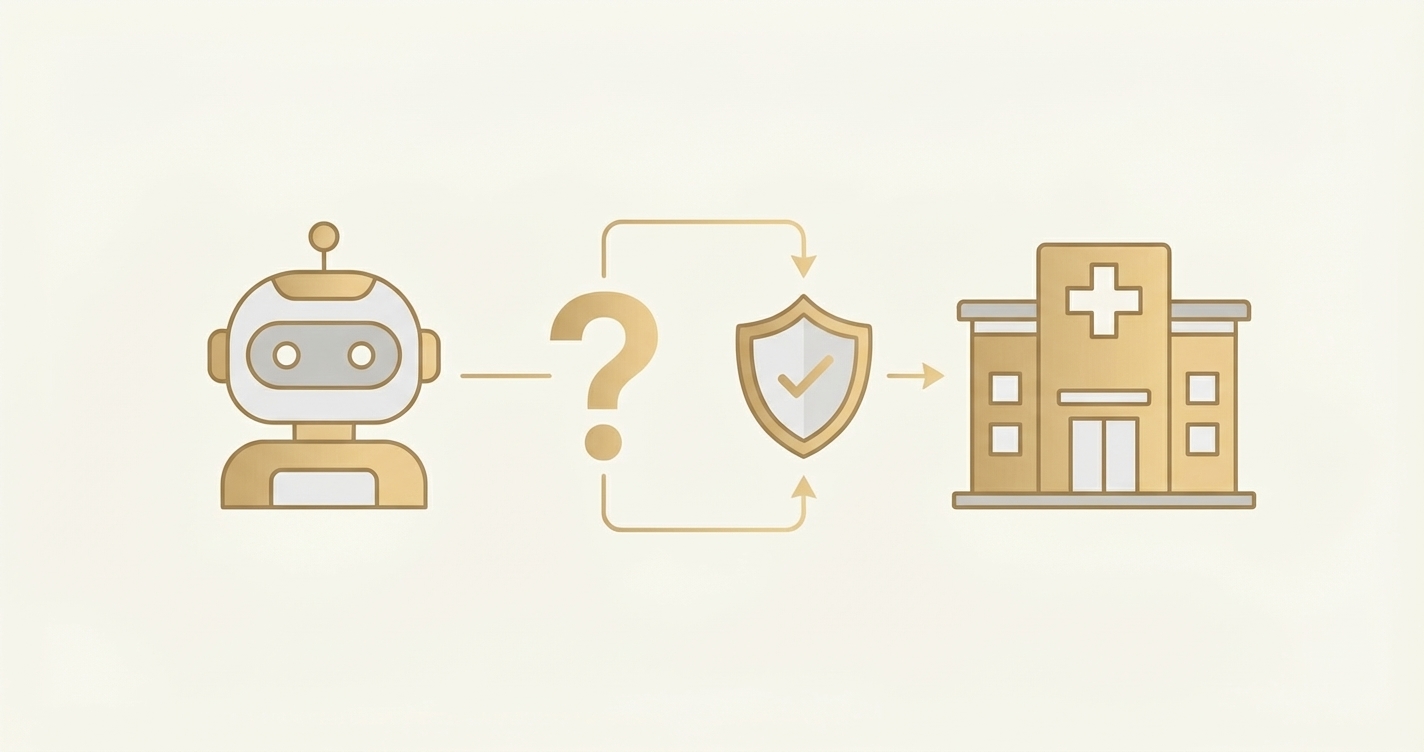
OpenClaw can run multiple agents—that's not the differentiator. The real differences are architecture, oversight, and how AI works with your team:
| Aspect | OpenClaw | Ventus AI |
|---|---|---|
| Purpose | Replace human tasks | Augment each employee's capabilities |
| Architecture | Flat, isolated agents | Hierarchical: different levels with different specializations |
| Knowledge | Siloed per agent | Company-wide memory sharing across all teammates |
| Reporting | None | Lower levels report up, insights flow to leadership |
| Security | Exposed ports, no compliance | SOC 2 Type II, HIPAA, signed BAAs |
| Learning | Static prompts | Learns from your SOPs, improves continuously |
The Ventus difference: Every employee gets an AI teammate that amplifies what they already do. Your AR specialist gets an AR Bot. Your front desk gets a scheduling Bot. These Bots report insights up the chain—so leadership sees patterns across the entire organization, not just individual task completion.
This isn't AI replacing your team. It's AI making every person on your team more effective.
How Ventus AI Does Healthcare Automation Right
The need for AI automation in healthcare is real and valid. At Ventus AI, we built our platform specifically for healthcare and other regulated industries. Here's how we do it differently from OpenClaw:
Enterprise-Grade Security (Not Exposed Ports)
- SOC 2 Type II certified: Our controls are audited and verified to work over time
- HIPAA compliant: We sign BAAs and maintain all required safeguards
- Encrypted everywhere: Data is protected at rest and in transit
- No exposed instances: Our architecture prevents the configuration errors that create vulnerabilities
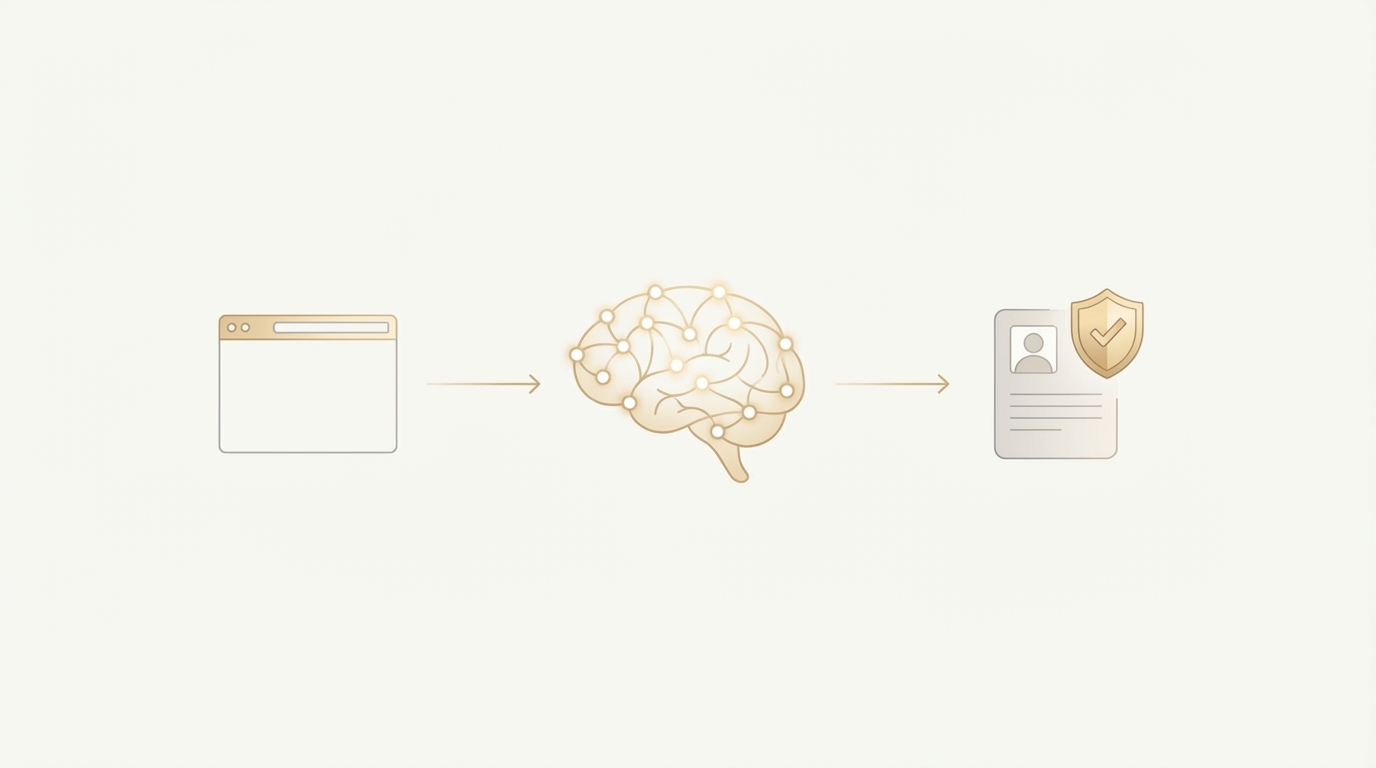
- Browser-native automation: Our AI teammates work in the same browser environment your staff uses—no open ports, credentials stored in secure vaults, full audit trails for every action
Specialized AI Teammates for Healthcare
Every role gets an AI teammate that amplifies their capabilities:
- AR Specialist + AR Bot: Follows up on aged claims, navigates payer portals, surfaces which claims need human attention
- Billing Coordinator + Claim Statuser Bot: Checks status across 40+ payer portals, documents findings, flags exceptions
- Front Desk + Scheduling Bot: Handles appointment reminders, answers routine questions, escalates complex issues
- Eligibility Staff + Verification Bot: Checks insurance coverage proactively, flags issues before appointments
Each Bot is trained on your SOPs and works alongside your employee—not instead of them.
Hierarchical Oversight & Company-Wide Insights
This is what truly sets Ventus apart: we deploy a customized GPT for your organization (like SmilistGPT, or YourCompanyGPT) that creates a continuous improvement flywheel:
- Ask SOP questions: Staff ask questions in Slack, get instant answers backed by your documentation
- Improve SOPs: Every question reveals gaps—the system auto-updates your processes
- Automate the issues: Based on what we learn, we deploy Bots to handle repetitive work (IV, AR, claim status, etc.)
- Get business insights: Leadership sees patterns across all teams and locations
- The flywheel spins: Better SOPs → smarter Bots → more insights → better SOPs
Company-wide memory sharing: When your Phoenix office discovers a faster way to handle Delta Dental appeals, that knowledge automatically becomes available to your Austin office. No more reinventing the wheel at every location.
Augment, Not Replace
- AI Bots work with your employees, not instead of them
- Each person stays in control—Bots handle the repetitive work, humans handle judgment calls
- Exceptions automatically escalate to the right person
- Your team gets more done, not replaced
Rapid Deployment
Typical deployment takes under 7 days, with no complex integrations or infrastructure changes. You get automation benefits quickly without the security risks of consumer tools.
Enterprise teams deploy in 7 days — no integration required.
Book Your Free 15-Minute DemoReal Results: Ventus AI in Action
Secure AI automation isn't just about avoiding risks—it delivers real operational benefits. Here's what healthcare organizations achieve with purpose-built solutions:
"Ventus stands out from the noise in the AI and automation market. Their approach allows them to ramp up quickly in the messy middle of RCM."
— Philip Toh, Co-founder & President, Smilist
Smilist, a multi-location dental group, partnered with Ventus AI to transform their RCM operations. We deployed SmilistGPT—a dedicated AI system inside their organization. Here's what it looks like:
- SOP training for RCM teams: Staff ask questions in Slack, get instant SOP-backed answers. The system identifies gaps and improves documentation automatically.
- 3,000+ claim status checks daily—volume that would otherwise require multiple full-time coordinators
- Manager dashboard: Leadership navigates and monitors Bot performance in real-time, sees business insights across all locations
- Full HIPAA compliance with audit trails and secure credential management
- Deployment in days, not months
This is the promise of AI automation done right: the efficiency gains you need, without the security and compliance risks.
See how enterprise healthcare organizations deploy AI agents in under 7 days.
Request a DemoFrequently Asked Questions
What is OpenClaw and why is it popular?
OpenClaw (formerly Clawdbot/Moltbot) is an open-source AI agent with 180,000+ GitHub stars. It runs locally on your own hardware and integrates with messaging platforms, email, and calendars to automate tasks 24/7. Its popularity stems from the "own your data" appeal and the promise of an AI assistant at a fraction of the cost of human staff. For personal use, it's genuinely impressive—but it wasn't designed for regulated industries.
Is OpenClaw safe to use in healthcare settings?
OpenClaw has security vulnerabilities that create significant risks for healthcare organizations, including exposed instances, Local File Inclusion exploits, and extension marketplace risks. It lacks HIPAA compliance certifications and cannot sign a Business Associate Agreement. For organizations handling PHI, these gaps create compliance and security concerns that are difficult to mitigate.
What vulnerabilities have been found in OpenClaw?
Security researchers have discovered: over 30,000 publicly exposed instances, Arbitrary Local File Inclusion (LFI) vulnerabilities, localhost auto-approval bypasses, prompt injection vulnerabilities, and problematic extensions in the ClawHub marketplace. These issues were documented by Bitsight, SecurityWeek, and other security researchers in early 2026.
Can I make OpenClaw HIPAA compliant?
HIPAA compliance requires organizational accountability, Business Associate Agreements, and verified security controls. OpenClaw is community-maintained open-source software with no entity to sign a BAA and no compliance certifications. While you could harden an individual deployment, the fundamental architecture and lack of accountability make full HIPAA compliance extremely difficult.
What should I do if my organization is already using OpenClaw?
Follow the remediation checklist in this article: inventory all instances, disconnect from PHI systems, rotate credentials, check for exposed instances, review installed extensions, and document for compliance purposes. Then work with your compliance officer to assess any potential breach implications and implement network controls to prevent future unauthorized deployments.
How do I prevent shadow AI in my healthcare organization?
Prevent shadow AI by: providing approved AI tools that meet staff needs (people deploy unauthorized tools because they need help with real problems), implementing network monitoring to detect unauthorized applications, establishing clear policies about AI tool usage, training staff on compliance risks, and creating channels for staff to request new tools through proper vetting.
What's the difference between OpenClaw and enterprise healthcare AI?
OpenClaw can run multiple agents—that's not the issue. The real differences are: (1) Purpose: OpenClaw replaces tasks; Ventus augments each employee with their own AI Bot. (2) Architecture: OpenClaw agents are flat and isolated; Ventus has hierarchical oversight where Bots report up and insights flow to leadership. (3) Knowledge: OpenClaw knowledge is siloed; Ventus shares company-wide memory so when one location learns something, everyone benefits. (4) Compliance: OpenClaw has no SOC 2 or BAA; Ventus is fully HIPAA compliant.
How does Ventus AI differ from OpenClaw?
Ventus takes a fundamentally different approach: instead of replacing tasks, we give every employee an AI Bot that amplifies their capabilities. Your AR specialist gets an AR Bot. Your front desk gets a scheduling Bot. These Bots are organized hierarchically—insights flow up to leadership, and company-wide knowledge is shared across all locations. We're SOC 2 Type II certified, HIPAA compliant, and sign BAAs. The result: your team gets more done without being replaced.
Explore more AI insights or see our integration options.
Conclusion: Get the Benefits Without the Risks
OpenClaw's viral success reflects a real need: healthcare organizations want AI automation to reduce administrative burden and improve efficiency. That need is completely valid—and it's why we built Ventus AI.
The answer isn't to avoid AI automation. The answer is to choose tools designed for your industry's requirements. Consumer-grade tools built for personal productivity can't meet healthcare's security, compliance, and accountability needs. Purpose-built solutions—with specialized AI teammates, intelligent oversight, and continuous improvement—can.
The good news: you don't have to choose between efficiency and compliance. AI automation for healthcare RCM, eligibility verification, claims management, and administrative workflows is achievable—with the right tools and the right architecture.
If you're exploring AI automation for your healthcare organization, we'd love to show you what a coordinated team of AI teammates can do. Book a demo to see Ventus AI in action, or explore our solutions for dental RCM, medical RCM, and enterprise automation.
References:
- Bitsight Security Research: "OpenClaw: The AI Butler With Its Claws On The Keys To Your Kingdom" (February 2026)
- SecurityWeek: "Vulnerability Allows Hackers to Hijack OpenClaw AI Assistant" (February 2026)
- The Verge: "OpenClaw's AI 'skill' extensions are a security nightmare" (February 2026)
- CNBC: "From Clawdbot to Moltbot to OpenClaw: Meet the AI agent generating buzz and fear globally" (February 2026)
- HHS Office for Civil Rights: HIPAA Security Rule guidance
- CAQH Index: Administrative transaction automation in healthcare
Ready to Transform Your Revenue cycle?
See how Ventus AI agents can automate your end-to-end RCM automation with AI agents in under 7 days—no complex integrations required.
Book Your Free Demo
Enterprise AI Automation for Healthcare RCM
Written by the Ventus AI team — healthcare RCM practitioners, automation engineers, and former revenue cycle leaders building AI agents that work as teammates alongside billing teams. Ventus is SOC 2 Type II certified and HIPAA compliant.